

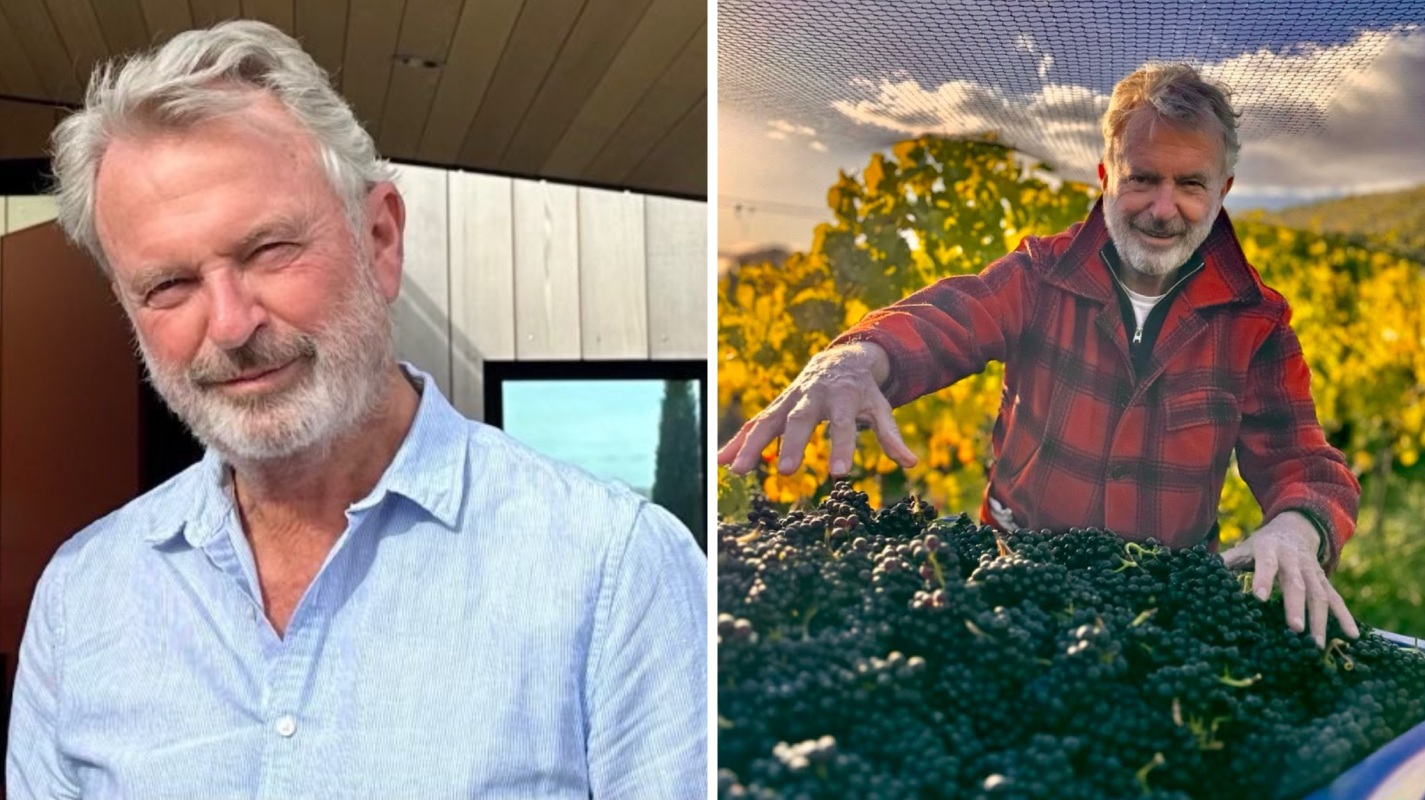
Sam Neill has sadly died aged 78, his family has confirmed.
Thank you for reading this post, don't forget to subscribe!The New Zealand icon – perhaps best known to millions as palaeontologist Dr Alan Grant in the Jurassic Park franchise – died in Sydney, Australia, surrounded by his family.
His death was described as “sudden and unexpected”, with his family confirming that Neill remained cancer-free at the time of his passing, BBC News reports.
News of his death was announced in a statement on Monday.
“It is with immense sadness that the whānau of Sam Neill share the news of his passing on Monday 13th July, in Sydney Australia,” the statement read.
“Sam was surrounded by family and passed with the dignity that has characterised his whole life. The loss was sudden and unexpected but blessed by the fact that Sam remained cancer free. They would like to express their deepest gratitude to the staff at St Vincent’s Private Hospital for their incredible care.
“More details will be shared later, but for now, on behalf of the family, we ask that you respect their privacy as they navigate this immeasurable loss.”
Neill had revealed in 2023 that he had been diagnosed with stage-three angioimmunoblastic T-cell lymphoma, a rare form of non-Hodgkin lymphoma. His diagnosis was first disclosed in his memoir, Did I Ever Tell You This?, which he began writing while undergoing treatment.
Speaking about death ahead of the book’s release, Neill delivered a typically candid assessment of his situation.
“I’m not afraid to die, but it would annoy me,” he told The Guardian in an interview ahead of the release. “Because I’d really like another decade or two, you know? We’ve built all these lovely terraces, we’ve got these olive trees and cypresses, and I want to be around to see it all mature. And I’ve got my lovely little grandchildren. I want to see them get big.
“But as for the dying? I couldn’t care less.”
Neill initially underwent chemotherapy, but later revealed that the treatment had stopped working.
“I was on chemotherapy and the pretty miserable business but it was keeping me alive,” he told 7News. “Then the chemo stopped working. I was at a loss and it looked like I was on the way out, which wasn’t ideal, obviously.”
He later underwent CAR T-cell therapy following a clinical trial in Australia, with the treatment genetically modifying patients’ blood cells.
Earlier this year, Neill shared the remarkable news that he was cancer free – making news of his passing even more heartbreaking.
“I’ve had a scan just now, and there is no cancer in my body. This is an extraordinary thing,” Neill shared. And, as previously stated, his family confirmed that he “remained cancer-free” at the time of his passing.
Tributes have already been paid to the beloved actor, whose screen career stretched across more than five decades and who repeatedly demonstrated a remarkable ability to move between enormous Hollywood productions and acclaimed arthouse films.
Australian Prime Minister Anthony Albanese mourned Neill in a tribute shared on X.
“Sam Neill starred in so many beloved Australian stories and he earned a special place in Australian hearts. Wry and dry, thoughtful and laconic, Sam fought illness with the same dignity, humour and conviction that gave strength to his every performance.
“He will be much mourned and long remembered. May he rest in peace.”
Although widely recognised as one of New Zealand’s most famous actors, Neill’s story began in Northern Ireland.
He was born in Omagh, County Tyrone, in 1947 while his New Zealander father was stationed there as an officer with the Irish Guards.
Neill lived in Northern Ireland until the age of seven before his family moved to New Zealand.
“I was born in Omagh, we lived in Armagh and my favourite place here was Tyrella beach, I sort of think that’s where I grew up,” Neill told the BBC in 2012.
Those roots would later become particularly relevant when he was cast as Belfast police chief Major Chester Campbell in Peaky Blinders in 2013.
By that point, Neill said his Northern Ireland accent had been “well beaten out” of him by classmates in New Zealand. He received help from James Nesbitt and Liam Neeson as he worked to relearn it for the role.
Long before Peaky Blinders, however, Neill had established himself as one of the most versatile actors of his generation.
His breakthrough came in the 1977 New Zealand thriller Sleeping Dogs, the country’s first film to receive a theatrical release in the United States.
International audiences increasingly took notice following his appearance in the 1979 film My Brilliant Career, which also introduced Judy Davis.
Neill went on to appear in Omen III: The Final Conflict, playing Damien in the third instalment of the horror series.
Further roles followed in films including Possession, The Hunt for Red October and Phillip Noyce’s 1989 thriller Dead Calm, where he appeared alongside a then-relatively unknown Nicole Kidman.
He also twice co-starred with Meryl Streep, appearing in Australian director Fred Schepisi’s Plenty and later A Cry in the Dark.
But one year perhaps demonstrated Neill’s extraordinary range better than any other.
In 1993, he starred as Dr Alan Grant in Steven Spielberg’s Jurassic Park.
The role would become the defining blockbuster performance of his career, with Neill’s palaeontologist thrown into a nightmare as the prehistoric attractions of Jurassic Park broke free.
The same year, Neill appeared in Jane Campion’s The Piano.
Those two films could hardly have been more different – but both cemented Neill’s international acclaim as well as his legacy in cinema.
The Piano won the Palme d’Or and featured Neill in a dramatic role alongside Holly Hunter. His character’s journey saw him move from devoted husband into a far darker figure as the story unfolded.
Neill returned as Dr Alan Grant in Jurassic Park III in 2001 before once again reprising the role in Jurassic World Dominion in 2022.
His lengthy list of credits also included The Tudors and Hunt for the Wilderpeople.
Away from major film sets, Neill also found an entirely different connection with audiences during lockdown.
In a 2020 interview with The Independent, the actor said he had embraced becoming “the world’s lockdown jester” because “people need a bit of cheering up”.
From his home, Neill shared ukulele performances and children’s stories, created spoof film trailers and introduced people to rescue animals living on his New Zealand farm. He later explained the simple thinking behind the videos by again saying “people need a bit of cheering up”.
Neill also publicly spoke about the importance of listening to scientific experts and expressed his concern over the response to climate science.
“I’m a believer in science,” he said. “If I have to listen to anyone, I want it to be a f***ing expert and not some clown who’s got some Trumpian agenda.”
Additionally, in 2022, Neill accepted the title of Knight Companion of the New Zealand Order of Merit in recognition of his services to film, following a career of featuring in more than 50 films – becoming one of New Zealand’s most successful Hollywood exports and a familiar presence to generations of viewers.
Neill is survived by his four children and grandchildren.
Our thoughts go out to his family, friends, and fans at this time.
Featured image credit: Instagram/samneilltheprop
