

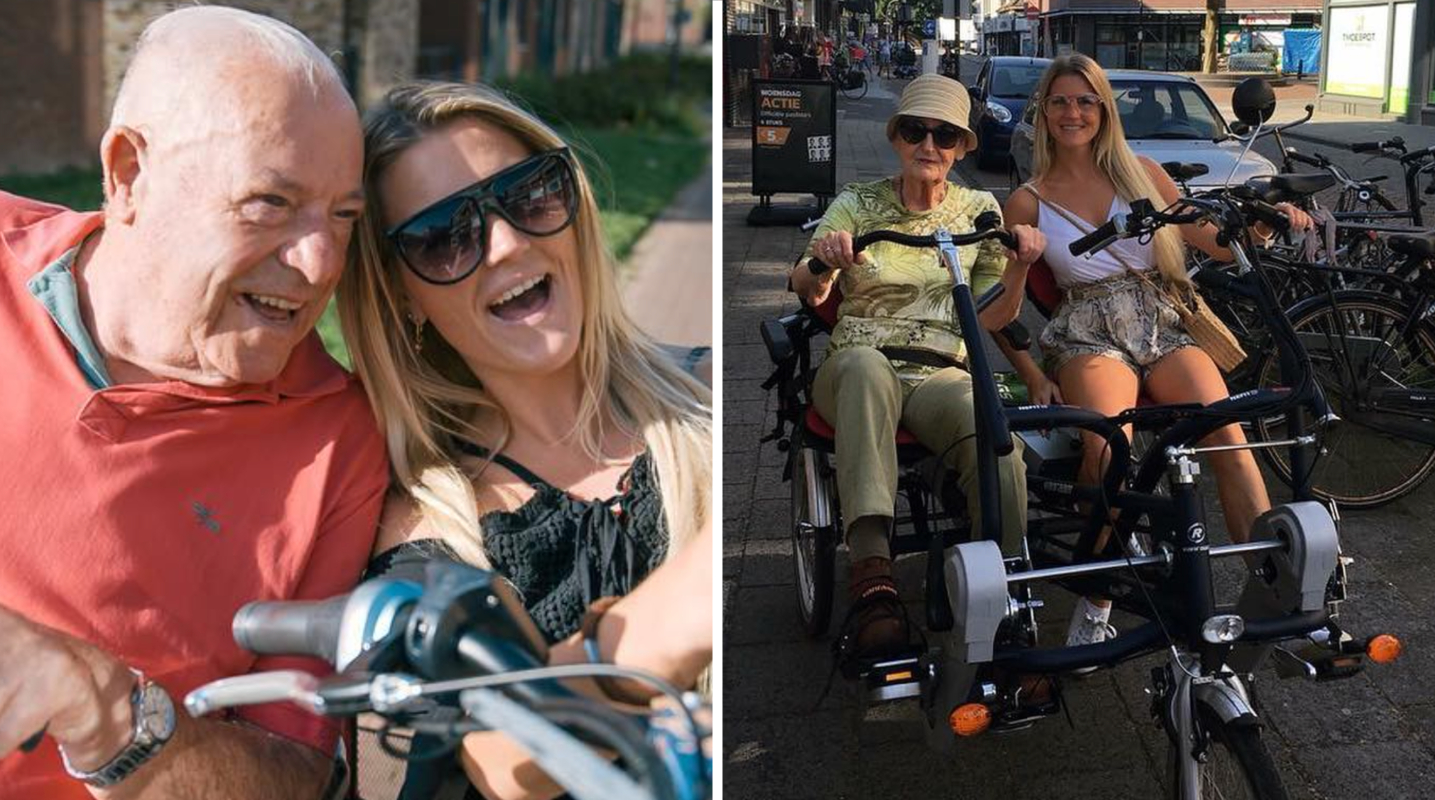
A nursing home in the Netherlands has found an unusual way to tackle loneliness among elderly residents by offering university students free accommodation in exchange for 30 hours of companionship each month.
Thank you for reading this post, don't forget to subscribe!At Humanitas, a retirement home in the Dutch city of Deventer, students live alongside approximately 160 elderly residents, spending time watching sports, celebrating birthdays and simply keeping their older neighbours company.
But the initiative didn’t begin as a carefully planned project to combat loneliness.
It started with a university student who was fed up with his living conditions.
Onno Selbach had been staying in student accommodation but had grown frustrated with the noise and poor conditions.
Looking for an alternative, he contacted Humanitas to enquire about the possibility of living there instead.
His request caught the attention of the home’s director, Gea Sijpkes, who recognised an opportunity to address a different problem affecting the elderly residents.
The pair began discussing an arrangement that would allow students to live at the facility in exchange for spending time with the people already living there.
What began as one student’s search for a quieter home eventually developed into an intergenerational housing programme.
Under the scheme, six students from the nearby Saxion and Windesheim universities were provided with small apartments at Humanitas without having to pay rent.
In return, they were expected to spend at least 30 hours each month acting as what the home described as “good neighbors”.
There was also one important rule: they couldn’t become a nuisance to the elderly residents.
Otherwise, the students were free to come and go as they pleased.
Rather than providing professional care, their role was primarily about companionship.
They joined residents for meals, introduced them to new activities and offered company when someone was unwell.
Speaking to PBS NewsHour, Sijpkes explained how the presence of younger people had changed the atmosphere inside the nursing home.
“The students bring the outside world in, there is lots of warmth in the contact,” she said.
The programme was designed to address a serious issue affecting older people.
Research published in 2012 by the National Academy of Sciences of the United States of America linked social isolation and loneliness among older adults with an increased risk of mortality.
By bringing students into the same living environment, Humanitas hoped to create more opportunities for meaningful social interaction.
And for some of the students, the experience offered considerably more than somewhere affordable to live.
One participant, 19-year-old urban planning student Jurriën Mentink, became involved in various activities with the residents.
He helped prepare meals, assisted with dinner service and introduced older neighbours to technology.
In one example, Jurriën helped 85-year-old resident Anton explore Facebook, giving him an introduction to a part of the digital world that younger generations had grown up using.
However, not every interaction involved an organised activity.
Jurriën explained that he particularly enjoyed teaching computer skills, cooking and occasionally just “hanging out.”
Speaking to the Australian Broadcasting Corporation, he described how much younger people could gain from spending time with older generations.
“Elderly people are very full of life,” Jurriën said. “As a student, you can learn a lot.”
Of course, living in a retirement home wasn’t entirely without its challenges.
Although students had initially been attracted by the prospect of escaping noisy university accommodation, they occasionally encountered a different kind of disturbance.
Some elderly residents, who were hard of hearing, would turn their televisions up so loudly that the noise could interrupt the students’ studies.
Sijpkes even joked that the rule against disturbing residents was relatively easy for the younger tenants to follow, given that many of their neighbours struggled with their hearing.
But the occasional loud television was a minor inconvenience compared with the more emotional realities of living alongside an ageing community.
For Jurriën, one of the hardest experiences came when a neighbour he had grown accustomed to seeing passed away.
He told ABC: “My neighbour in front of me, she died. That’s the sad part, of course. Sometimes it takes a blow.”
It was a reminder that the arrangement involved more than casual conversations and shared activities. By becoming part of the residents’ daily lives, the students also developed relationships that could carry genuine emotional weight.
And Humanitas wasn’t the only organisation exploring the idea.
According to the International Association of Homes and Services for the Ageing, similar intergenerational housing programmes had been introduced in other parts of the world.
A scheme launched in Barcelona, Spain, in the late 1990s was subsequently replicated in more than 20 cities across the country.
Comparable initiatives were also established in Lyon, France, and Cleveland, Ohio, in the United States.
The growing interest reflected a broader recognition that housing different generations together could help address challenges faced by both younger and older people.
While students often struggle with the cost and quality of accommodation, elderly people can face increasing isolation as their social networks become smaller.
Humanitas offered a way of addressing both issues through a single arrangement.
What started with one student’s frustration over noisy accommodation ultimately became an example of how different generations could support one another.
And at Humanitas, the arrangement showed that sometimes the most valuable thing a person can offer isn’t money or specialist care.
It’s their time.
Featured image credit: Instagram/humanitasdeventer
