

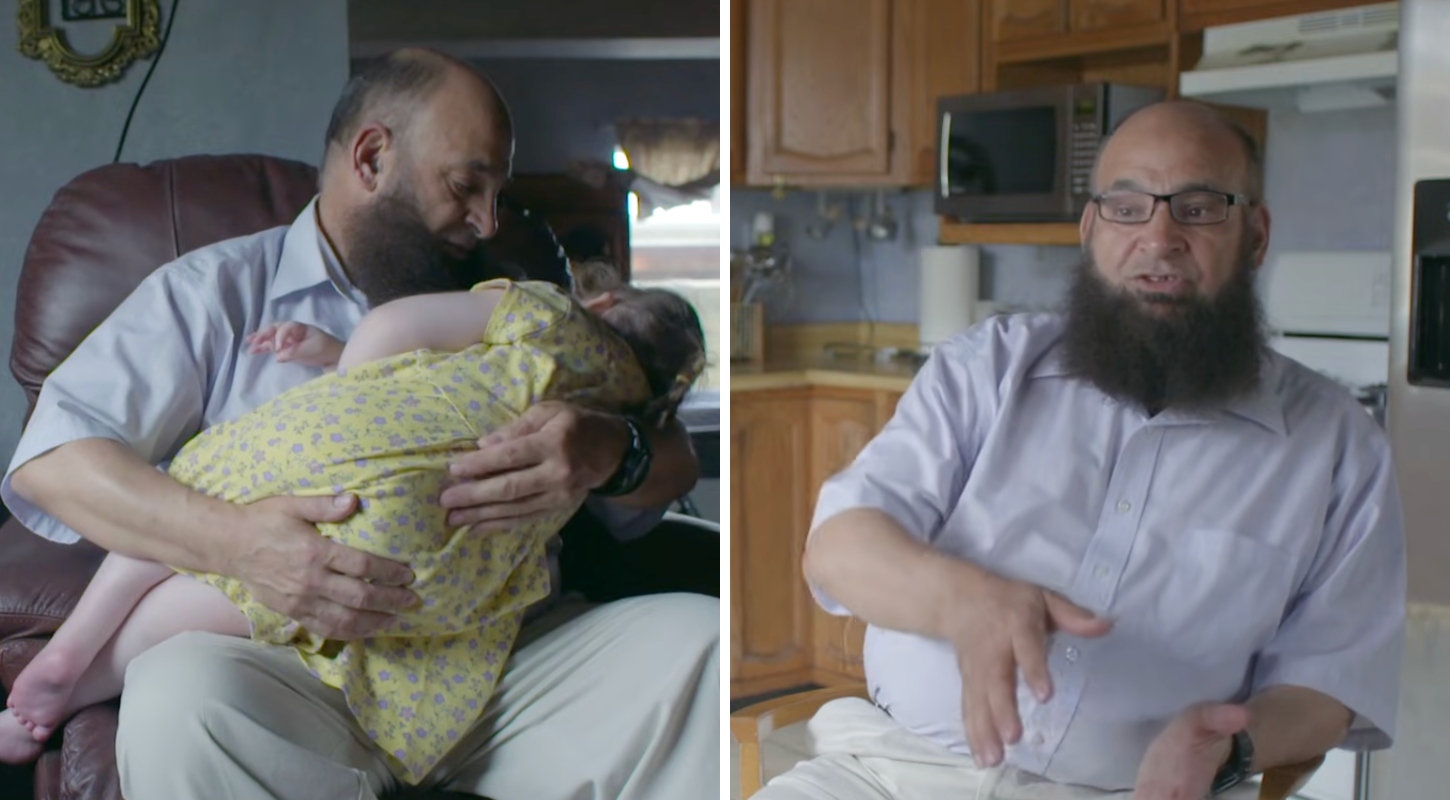
For more than two decades, Mohamed Bzeek has opened his home to children facing circumstances few people could imagine — making sure that, however short their lives may be, they experience what it means to be loved.
Thank you for reading this post, don't forget to subscribe!The 62-year-old from Azusa, California, has cared for terminally ill foster children since 1995, including youngsters unable to see, hear or speak, per PEOPLE.
During that time, Bzeek has had to bury 10 severely disabled foster children.
He has also endured the death of his wife, Dawn, who died after developing blood clots in her lungs. But rather than bringing his fostering journey to an end, her death strengthened his determination to continue the work they had shared.
“It only seemed natural to continue,” he said.
Bzeek is cared for a six-year-old girl whose identity cannot be revealed due to privacy laws. She was born deaf and blind and has microcephaly, a condition in which the brain does not develop properly.
With conventional communication impossible, Bzeek has found another way to let her know she isn’t facing life alone.
“The only way to communicate with her is by touch,” he explained, “and so I hold her. I want to know that somebody is here for her. Somebody loves her. She is not alone.”
The girl spends 22 hours each day connected to feeding and breathing tubes, while Bzeek sleeps on a sofa beside her bed.
His caring responsibilities extend to his 19-year-old son, Adam, who has osteogenesis imperfecta, also known as brittle bone disease. Adam studies computer science at Citrus College but has limited use of his hands, meaning his father assists with everything from homework to bathing and putting on shoes.
For Bzeek, the reason he continues to devote himself to children with severe medical needs is remarkably straightforward.
“I have been asked, ‘Why do you do this?’ and the answer is simple. Even if these children cannot communicate or see or hear, they have a soul. They need somebody to love them. I tell them, ‘It will be okay — I am here for you. We will go through this together.’ “
Many of the children who entered his home were sent directly from Los Angeles County hospitals after being given up or abandoned by parents unable to provide the care they required.
Rosella Yousef, assistant regional administrator for Medical Case Management Services, described Bzeek as an “exceptional foster parent”, saying his care helped the girl currently living with him survive well beyond the few weeks she was initially expected to live.
Bzeek’s commitment began alongside Dawn, who was already caring for foster children when they met. After marrying in 1989, the couple went on to care for dozens of youngsters together.
He ultimately developed a particularly deep connection with disabled and abandoned children.
“Their lives have value — it makes me happy when I see them smiling and know they are happy and content,” he said. “You don’t need words to know that.”
Some children arrived at his home without even having a name. Bzeek made sure that changed — and that they would be remembered after they were gone.
“I’ve had kids come here with everything from spina bifida to brain damage to having no immune system,” he said, “and many of them don’t even have a name. So I give them a name. And when it is time for them to die, I make sure that their names are remembered. They are never forgotten. Not for a minute.”
After experiencing so much loss, Bzeek remains focused on what he can give while each child is still with him.
“So I give these kids the best I have to offer in the short time they’re here. They leave here knowing that they were loved.”
Featured image credit: GoFundMe / YouTube
