

Most teenagers would be forgiven for wanting to spend their summer away from school relaxing, seeing friends or disappearing into their favourite hobby.
Thank you for reading this post, don't forget to subscribe!For 13-year-old Zac Waters, that hobby became something much bigger.
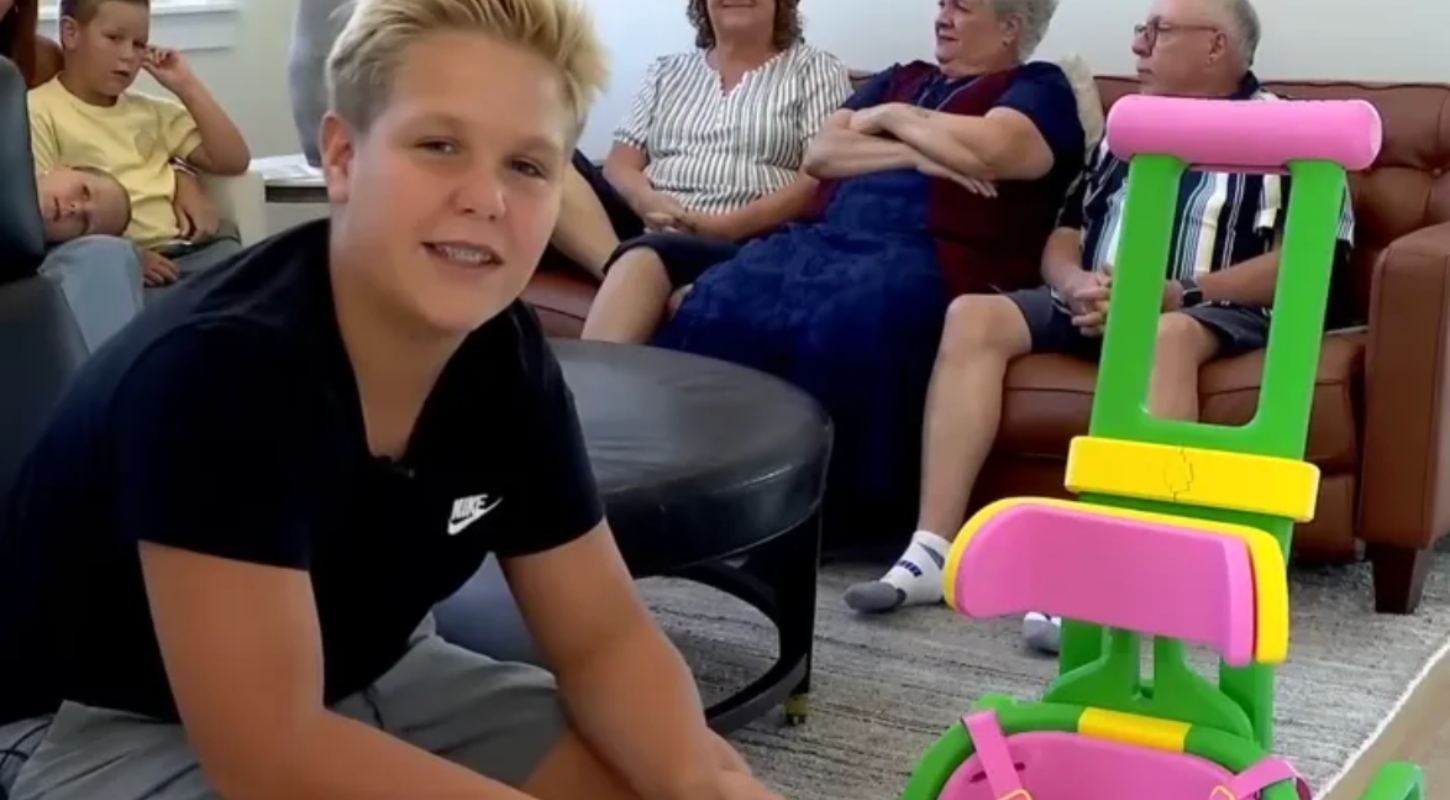
The Utah teenager spent an estimated 300 hours of his summer designing, printing, testing and assembling a custom 3D-printed wheelchair for a toddler — combining a fascination with technology with a desire to make a genuine difference to another family.
And remarkably, Zac’s journey into the world of 3D printing began with something as simple as watching a YouTube video.
After discovering the technology online, he decided he wanted to put his new interest towards a meaningful project.
“It combines my two favorite things in life: 3D printing and helping people in need,” Zac told ABC 4. “It just makes sense!”
That decision eventually led to Zac dedicating hundreds of hours to creating a wheelchair intended for a 21-month-old girl.
It wasn’t simply a case of pressing a button and waiting for a finished chair to emerge, either.
Across roughly 300 hours during his summer break, Zac worked on designing and printing the wheelchair before testing it and putting all the pieces together.
The assembly stage was his favourite part of the process.
The project was made possible through MakeGood, a nonprofit which uses 3D printing to produce custom assistive devices for people with disabilities.
MakeGood provides its designs to local makers for free, allowing people such as Zac to manufacture the devices within their own communities. Those who require the finished assistive devices also receive them free of charge.
The organisation’s approach is built around its belief that “assistive technology should be accessible to everyone”.
Zac’s contribution has earned praise from MakeGood founder and president Noam Platt, who highlighted the importance of volunteers willing to dedicate their own time and resources to helping others.
“I want to especially thank all of our volunteer makers, just like Zac, who are spending time and resources to help others,” said Platt. “We at MakeGood are so thrilled to see the Toddler Mobility Trainer project grow and bring makers and families together.”
The wheelchair Zac created is part of that Toddler Mobility Trainer project, and its design means makers can produce the equipment themselves.
“The TMT was intentionally designed to be easy to make by anyone, so we are seeing amazing stories like Zac,” Platt added. “For the makers, this is a real opportunity to be a true hero to people in their communities.”
Zac’s finished chair was also created with far more than basic mobility in mind.
It features a detachable cup holder and tray table, while space at the rear of the chair allows heavier medical equipment to be carried.
Importantly, the design has also been made with the toddler’s future in mind.
Both the headrest and footrest are adjustable, meaning the wheelchair can adapt as she gets older rather than being restricted to her current size.
Zac even made sure the chair had a personal touch.
Knowing that pink is the girl’s favourite colour, he incorporated pink accents into the wheelchair alongside green and yellow details.
It’s the sort of attention that shows why the project was about considerably more than Zac simply testing his technical ability.
After discovering 3D printing through a video, he has now become part of a wider community using the technology to produce something tangible for people who need it.
And the experience appears to have left him wanting to develop those skills even further.
“[It] makes me so happy to print it and see the smiles and how happy the family is, that really need the wheelchair,” Zac told ABC 4.
For his family, the significance of what he accomplished at just 13 years old goes beyond the impressive amount of work involved.
His grandmother, Charlotte Waters, hopes the project leaves Zac with an understanding of the impact one person can have on somebody else’s life, regardless of their age.
“We hope he always remembers that the greatest legacy anyone can leave is to make someone else’s life better,” said Charlotte. “His age does not define his ability to make a difference. His character does.”
Featured image credit: ABC 4 Utah / YouTube (screenshot)
