

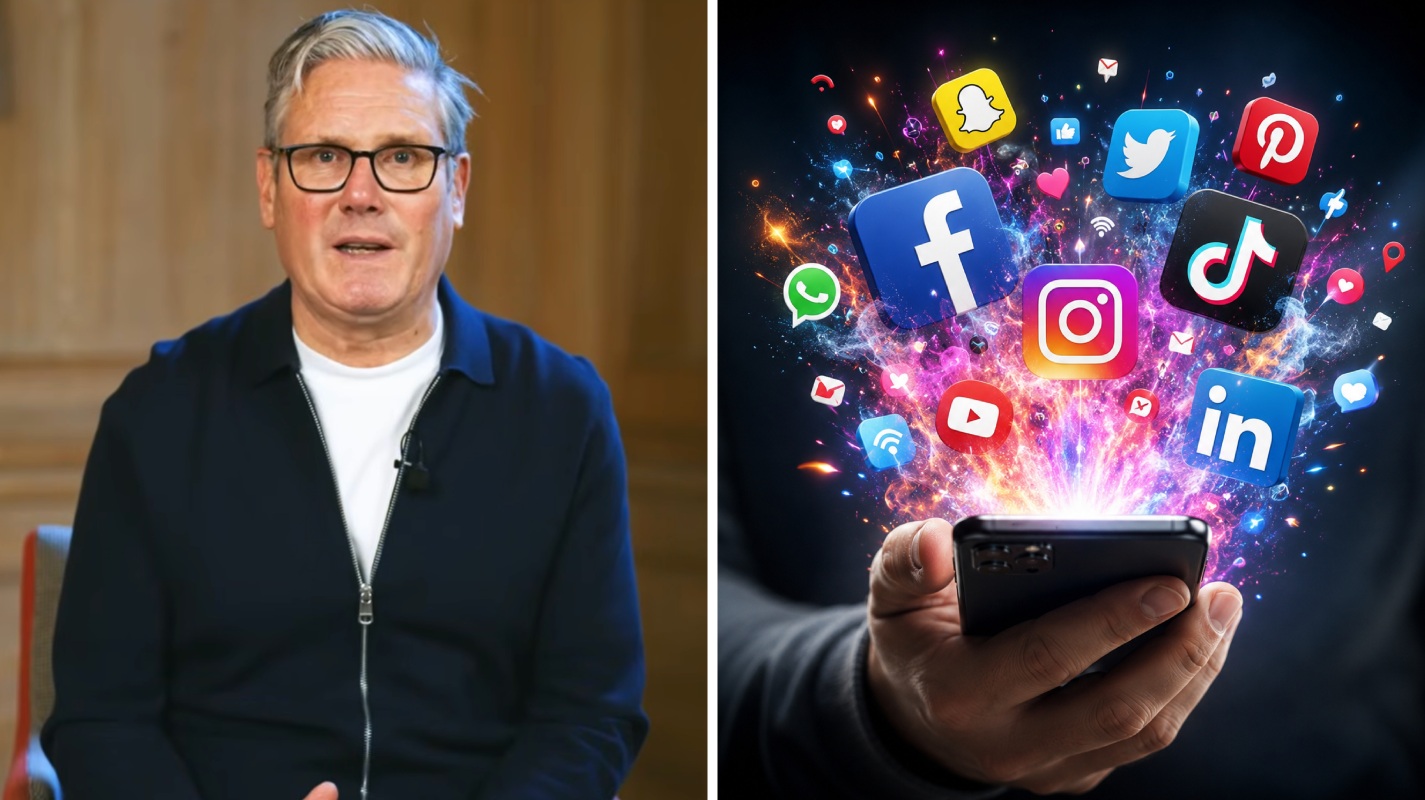
Millions of children across the UK are set to lose access to some of the world’s biggest social media platforms after the government confirmed plans to introduce a nationwide ban for under-16s from spring 2027.
Thank you for reading this post, don't forget to subscribe!Prime Minister Sir Keir Starmer announced the move as part of what he described as a major reset in online child safety, with legislation expected to be brought before Parliament before Christmas, BBC News reports.
The sweeping changes will block under-16s from platforms including TikTok, Snapchat, Instagram, Facebook, X and YouTube — marking one of the toughest crackdowns on youth social media use anywhere in the world.
“I am not prepared to compromise on the safety and happiness of our children, and that is why this ban must happen, and why this ban will happen,” Starmer said.
Calling the measures “a line in the sand” for tech firms, Starmer added: “Tech giants had their chance and failed, but we’re stepping in to protect children, back parents and set a new normal for future generations.”
The UK government says the legislation will follow Australia’s model, targeting “user-to-user platforms” where social interaction and user-generated content are central features.
However, not every app will be affected.
Messaging services such as WhatsApp and Signal will remain available, while gaming platform Roblox will also avoid a full ban. That said, certain features on wider digital services — including livestreaming and direct communication from strangers — will be blocked for under-16s.
YouTube Kids will also remain exempt.
The government is also considering additional restrictions for 16 and 17-year-olds, including overnight curfews and measures to interrupt “infinite scroll” features.
At the same time, so-called AI “romantic companion” chatbots and intimate AI interactions will be banned for under-18s.
Technology Secretary Liz Kendall said the government had been forced to act after years of inaction from major tech companies.
“Today we take a bold and significant step, towards creating a safer, healthier life online, for our children and future generations,” she said. “Tech companies have had countless opportunities to keep children safe, yet they have failed to act.”
The decision follows a major three-month consultation, which generated more than 116,000 responses. According to the government, nine in ten parents backed a social media ban for children under 16.
Campaigners who have long pushed for tougher restrictions welcomed the move.
Joe Ryrie, co-founder of Smartphone Free Childhood, said: “This social media ban won’t solve every problem overnight, but it is a major step forward. […] Millions of children will now get a few more years to grow up before entering online environments that were never designed with their wellbeing in mind.”
Bereaved parent Esther Ghey also praised the announcement.
“I’m so glad now that this announcement has been made,” she said, adding the ban could “potentially save so many children’s lives”.
But not everyone is convinced.
Social media companies have warned the blanket ban could backfire.
Meta said it risks “isolating teens from online communities and information, and driving them to unregulated alternatives”.
YouTube echoed those concerns, saying: “Blanket bans push kids out of such curated, supervised, beneficial experiences and towards anonymous, less safe services.”
Parents themselves also appear divided.
One parent told The Guardian: “It is such a relief that the social norm is shifting.”
Another was more sceptical, saying: “The genie is out of the bottle.”
Others warned the focus should be on forcing platforms to change, rather than banning users altogether.
“We’re trying to fix the symptoms and not the disease,” one parent said.
The government says it plans to strengthen age-verification systems to stop children bypassing the rules, with Ofcom tasked with reviewing enforcement and compliance.
Officials also say the measures are just the beginning, with more details due in July.
For now, the message from Downing Street is clear: childhood should mean less scrolling and more time offline — and from 2027, that could become the new normal for millions of British children.
Featured image credit: YouTube/Keir Starmer (screenshot)
