

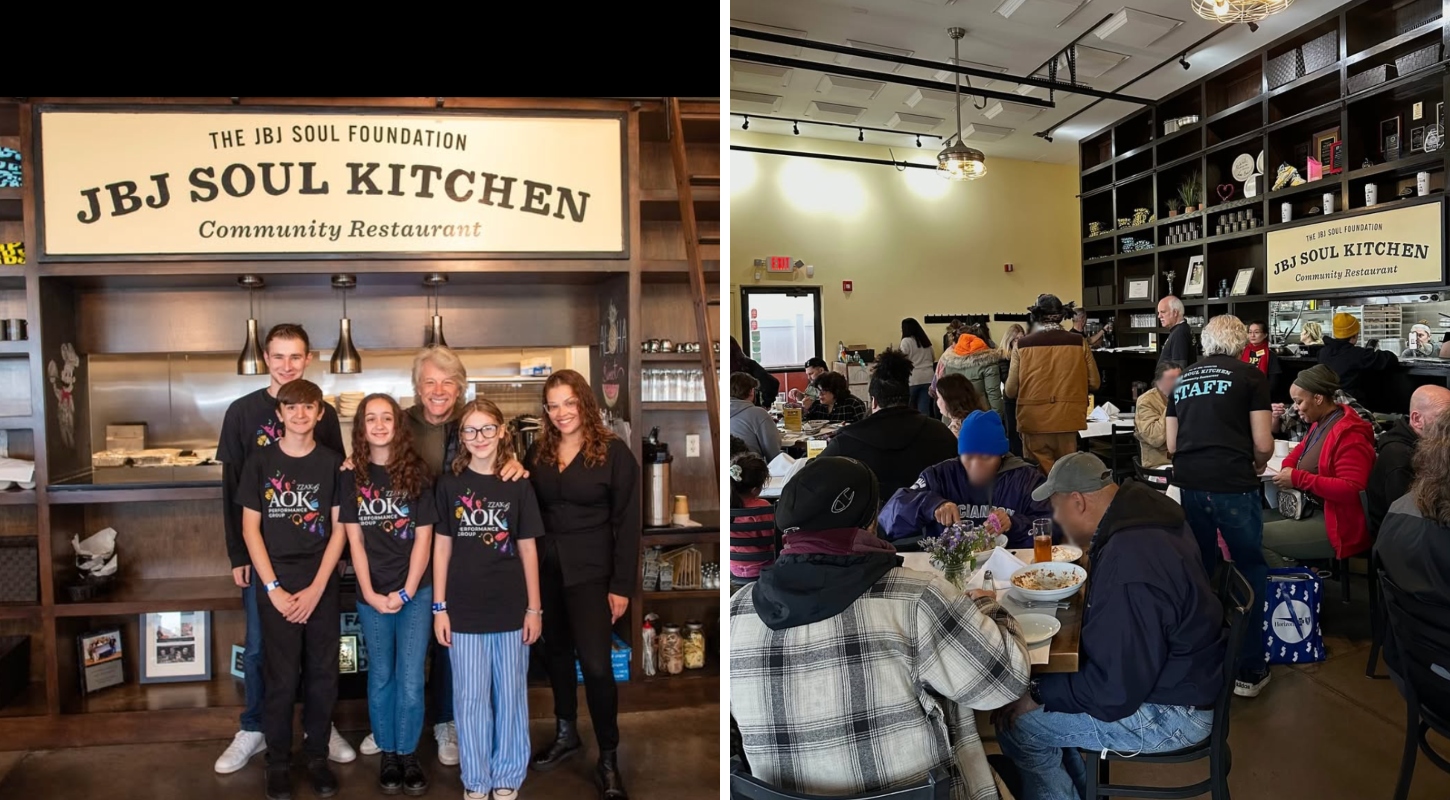
For most restaurants, the first thing customers look for is the menu price.
Thank you for reading this post, don't forget to subscribe!At the JBJ Soul Kitchen, there isn’t one.
Instead, diners are met with a very different idea — one built around dignity, community, and the belief that a hot meal shouldn’t depend entirely on what’s in somebody’s wallet that day.
The restaurants, launched by Jon Bon Jovi and his wife Dorothea Bongiovi, operate across four locations in New Jersey and work on a simple system. Guests who can afford to donate are encouraged to contribute between $20 and $30. Those who can’t are still welcome to eat and can instead volunteer their time in exchange for a meal.
That could mean washing dishes, serving tables, helping in the kitchen, or assisting wherever needed.
But according to Dorothea Bongiovi, the entire concept was designed carefully to avoid making people feel pitied or judged.
“Ours is a model of empowerment,” Bongiovi said, per CBS News. “We’re not here to make somebody feel like, ‘Oh, I’m giving this to you.’ You have earned it.”
The first restaurant opened back in 2011, and over the years, the initiative has grown into something much larger than simply feeding people.
For many visitors, the support available inside the restaurant can become a pathway toward stability.
Staff members help connect patrons with housing support, mental healthcare, and assistance obtaining state identification documents — services that can be difficult to access for people facing homelessness or financial hardship.
One of those staff members is hostess Nicole Dorrity, whose own experiences now shape the work she does every day.
“I came out of homelessness in 2017. So because of my lived experience, I’m able to kind of inherently know some of the barriers somebody might be up against,” Dorrity said.
That sense of understanding appears to be central to how the restaurants operate.
The Bongiovis have also made a deliberate decision to protect the privacy of diners who volunteer for their meals rather than pay with money. While many charitable projects often spotlight people’s struggles publicly, JBJ Soul Kitchen has tried to avoid turning hardship into marketing material.
“I would never wanna exploit someone’s circumstances,” Bongiovi said when asked about interviewing volunteer diners.
Despite the overwhelmingly positive reception from many supporters, the project hasn’t escaped criticism entirely.
A temporary lunch program run from a library in Toms River reportedly drew complaints from local officials, including concerns that unhoused people were being attracted to the area.
Bon Jovi, however, pushed back firmly on the criticism and downplayed the controversy surrounding the pop-up service.
“We did a pop-up in a library. We’re giving folks lunch. That’s all it is. Soup, salad, sandwiches, easy stuff,” Bon Jovi said.
Even with the debate surrounding some of the outreach efforts, the restaurants have continued to earn praise — not just for the mission behind them, but for the actual food being served.
The locations hold the highest TripAdvisor ratings in two of the towns where they operate and were also included in TripAdvisor’s “Best of the Best” list in 2023, placing them among the top 1% of reviewed businesses nationwide.
That reputation is helped by experienced chefs working behind the scenes, including classically trained chef Emily Yasi, who revealed that the famous owners remain far more hands-on than many people might expect.
“This past weekend I saw Jon on the ring camera coming and was just weeding and sweeping the walkways,” Yasi said. “They do it all, all behind the scenes, too.”
For Bon Jovi himself, the project seems deeply connected to home and identity rather than celebrity image.
After decades spent touring stadiums around the world with Bon Jovi, the restaurants represent a way of reconnecting with the communities he came from.
When asked which of his songs best captures the spirit of the restaurants, he didn’t hesitate with the answer.
“I mean, I’ve been everywhere there is to be, and all you wanted is to do is come back to where you’re from and be a part of that,” he said.
The song he chose was Who Says You Can’t Go Home.
And in many ways, that philosophy runs through the entire project.
At a time when food insecurity continues to affect millions of people, JBJ Soul Kitchen has built a model where somebody can walk through the door regardless of their circumstances, sit down, and eat alongside everyone else without being separated by what they can afford.
Featured image credit: JBJ Soul Kitchen / Instagram
