

For most kids, toys are more than just something to pass the time. They’re a way of understanding the world — and themselves.
Thank you for reading this post, don't forget to subscribe!But for thousands of children with disabilities, that simple experience has often come with a gap. The dolls on shelves don’t look like them. Don’t reflect their reality. Don’t tell their story.
That’s exactly what Amy Jandrisevits set out to change.
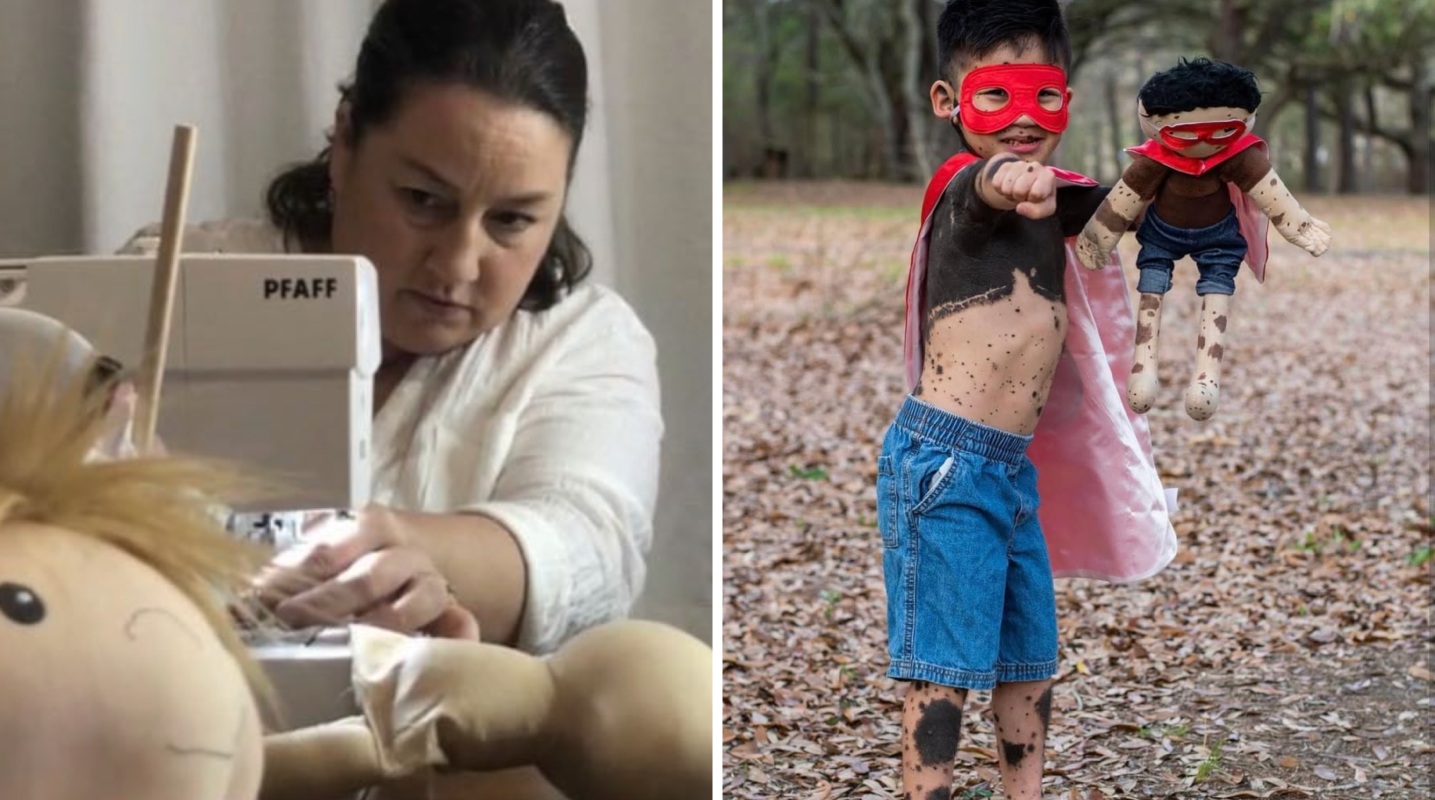
Through her nonprofit, A Doll Like Me, she has spent the past decade creating custom dolls designed to resemble the children who receive them — from limb differences to medical conditions, hearing aids to hair loss.
And in doing so, she’s helped kids across all 50 states and nearly 35 countries feel something many had been missing: Recognition and representation.
“At the very heart of this organisation is the idea that children need to see themselves in the toys that they play with,” the organisation explains on its website.
It’s a simple idea — but one that carries huge weight. Because for Amy, this isn’t just about dolls. It’s about identity, confidence, and belonging.
“My work is magical. I see the beauty in children that the people who love them see, then I capture it in the sweet face of a doll,” she says.
Before launching the initiative, Amy worked as a social worker in a pediatric oncology unit — an experience that shaped everything that came next.
“I think you always use whatever your experience is to shape who you are and what you do,” she told Ability Magazine. “Being a social worker at that time, I realized, kids of color and kids with any type of difference, whether it is a hand difference, wearing a hearing aid, or they are going through chemotherapy, are wildly underrepresented in the toy market.”
That realisation hit hardest during a Christmas donation programme.
“There was this little girl, an African-American child, who had just gone through chemo and lost all of her hair. It felt so wrong to say, ‘Here is this blonde princess for you for Christmas.’ It was not a good fit, but at that time, nothing else existed,” she explained.
That moment stayed with her, until – years later – what started as making Raggedy Ann dolls in her spare time turned into something much bigger after someone asked if she could create a doll for a child who had experienced an amputation.
She happily obliged, and the response was immediate.
Within two months, she had 200 more requests.
“People are hungry for representation, and we all would go to the ends of the earth for someone we love,” she said.
Today, every doll is handmade and completely unique and designed to match the child who will receive it. From prosthetic limbs to feeding tubes, scars to mobility aids – no detail is overlooked.
“Every kid should see themselves on the store shelves,” Amy said.
That belief has driven a decade of work that continues to grow.
In one particularly powerful story, a simple act of kindness connected two children on opposite sides of the world.
Through a community initiative called “a jar from afar,” a young girl named Nora donated her birthday and holiday money to support the organisation. Amy used that donation to create a superhero-themed doll for another child, Bonnie, in England — linking the two through a shared act of generosity.
It’s moments like that which define the project.
“I mean, really? Who would have imagined ten years ago that I’d be sending dolls around the world? Like it it’s just it’s mind-blowing. Even to me, and I do this every single day,” Amy said.
But despite the global reach, demand continues to outpace supply. There are currently around 2,000 children on the waiting list for a custom doll, Fox 11 reports. And that speaks to a much bigger issue.
While the toy industry has made some progress — introducing more diverse dolls in recent years — representation for children with disabilities remains limited.
Amy sees her work as part of a wider push to change that.
Because these dolls aren’t just toys. They help children with disabilities process their experiences, build confidence, and feel seen in a world that doesn’t always reflect them.
And perhaps most importantly, they remind kids that their differences don’t need to be hidden. They can be celebrated!
Featured image credit: Instagram/@a_doll_like_me (screenshots)
