

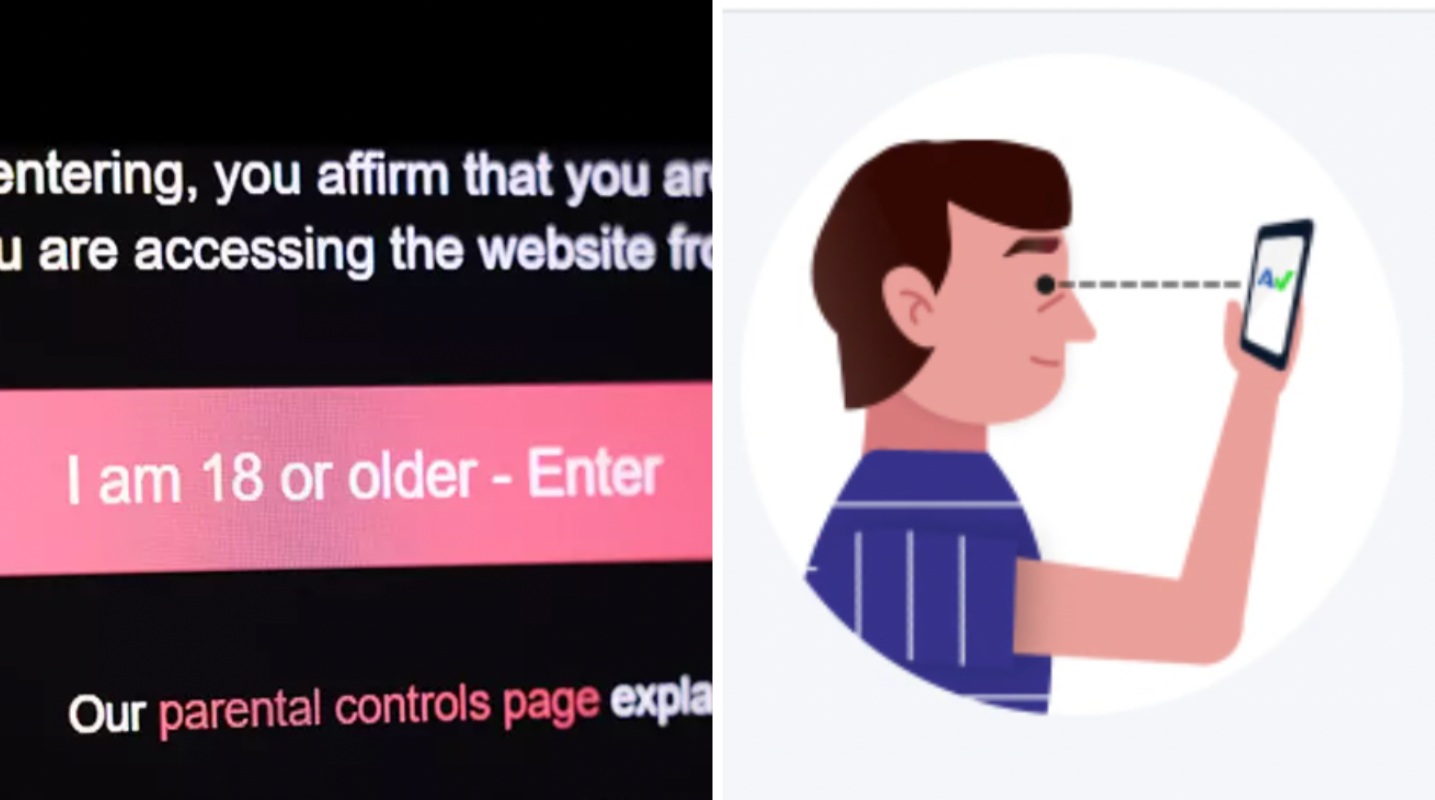
The UK’s new online safety rules were supposed to make it harder for children to access age-restricted content online.
Thank you for reading this post, don't forget to subscribe!Instead, some teenagers are apparently beating facial recognition systems with nothing more than an eyebrow pencil and a fake moustache.
A new report from Internet Matters has revealed that children across the UK are finding surprisingly simple ways to bypass online age verification checks, despite stricter rules introduced under the UK’s Online Safety Act.
The report, titled The Online Safety Act: Are Children Safer Online?, surveyed 1,270 children aged between 9 and 16 alongside their parents to measure how effective the new regulations have actually been.
The findings were eye-opening.
According to the research, around one-third of children said they had successfully bypassed online age checks within the last two months alone.
And in one of the more bizarre examples included in the study, a mother told researchers she caught her 12-year-old son drawing a moustache onto his face using an eyebrow pencil in order to fool a platform’s facial age estimation tool.
It reportedly worked.
The system verified him as old enough to continue.
That wasn’t an isolated workaround either. Children involved in the study described a range of increasingly creative tactics being used to trick age verification systems.
Some said they simply entered fake birthdays when signing up to platforms, while others admitted borrowing identification from older relatives or friends.
More advanced methods involved uploading videos of different people entirely — and in some cases, even using video game characters to pass facial recognition checks.
“I’ve seen clips of people online where they’ll get clips of video game characters like turning their head and use it for age verification,” one 11-year-old girl told researchers.
The tactic may sound ridiculous, but it has apparently worked often enough to spread online.
As reported by Dexerto, some users even used footage from Death Stranding to bypass filters, with the game’s hyper-realistic rendering of Sam Porter Bridges fooling systems into believing they were looking at actor Norman Reedus.
The report suggests many children are not only aware of loopholes in verification systems — they actively view them as easy to exploit.
Overall, 46% of children surveyed said age checks are easy to bypass, compared to just 17% who believed they were difficult.
Confidence increased among older children, too, with 52% of those aged 13 and above saying the systems were easy to beat.
Perhaps more concerningly, the study also found that some parents are helping them do it.
Around 26% of parents admitted they had allowed their child to bypass age checks, while 17% said they had actively assisted them.
The findings arrive just months after major parts of the UK’s Online Safety Act came into force in July 2025.
The legislation, introduced by the UK government and enforced by media regulator Ofcom, was designed to place greater responsibility on online platforms to protect children from harmful or age-inappropriate content.
Under the law, websites and apps that host pornography or other harmful material accessible to children are now required to implement “highly effective age assurance” systems.
That can include facial age estimation technology, photo ID matching, credit card checks, digital identity wallets, or mobile network verification.
The UK government previously said the measures were intended to create “safer online experiences for children” while preventing minors from easily accessing adult material.
Ofcom has also been granted powers to fine companies that fail to comply. Platforms found breaching the rules can face penalties of up to £18 million or 10% of their global annual revenue — whichever is greater.
The regulator has repeatedly stated that platforms must ensure age-check systems are technically accurate, robust, and difficult for children to bypass.
However, the Internet Matters findings are likely to reignite concerns about whether current facial recognition systems are actually fit for purpose.
Critics of facial age estimation technology have long argued that many systems can be manipulated with makeup, altered lighting, edited images, masks, or AI-generated visuals.
Others have raised privacy concerns around the collection and storage of biometric facial data, particularly when children are involved.
The UK government has maintained that platforms themselves are responsible for selecting compliant technology, rather than mandating a single nationwide verification system.
In guidance published around the Online Safety Act rollout, Ofcom stated that platforms should regularly test the effectiveness of their age assurance measures and adapt them as children discover new methods of bypassing restrictions.
Per the Independent, an Ofcom spokesperson said: “This report underlines why the Online Safety Act matters. Without protections like robust age checks, children have been routinely exposed to risks they didn’t choose, on services they can’t realistically avoid. Weak or easily bypassed age checks are not good enough.
“In the UK, our rules make tech firms responsible for keeping the platforms children use safer. While progress is being made, we’re clear that there is still more to do.
“We’ve challenged the biggest services in the world to do more to protect children, and won’t hesitate to act where they fall short.”
For now, though, it appears some teenagers are still several steps ahead.
Featured image credit: Google/AgeVerif (screenshots)
