

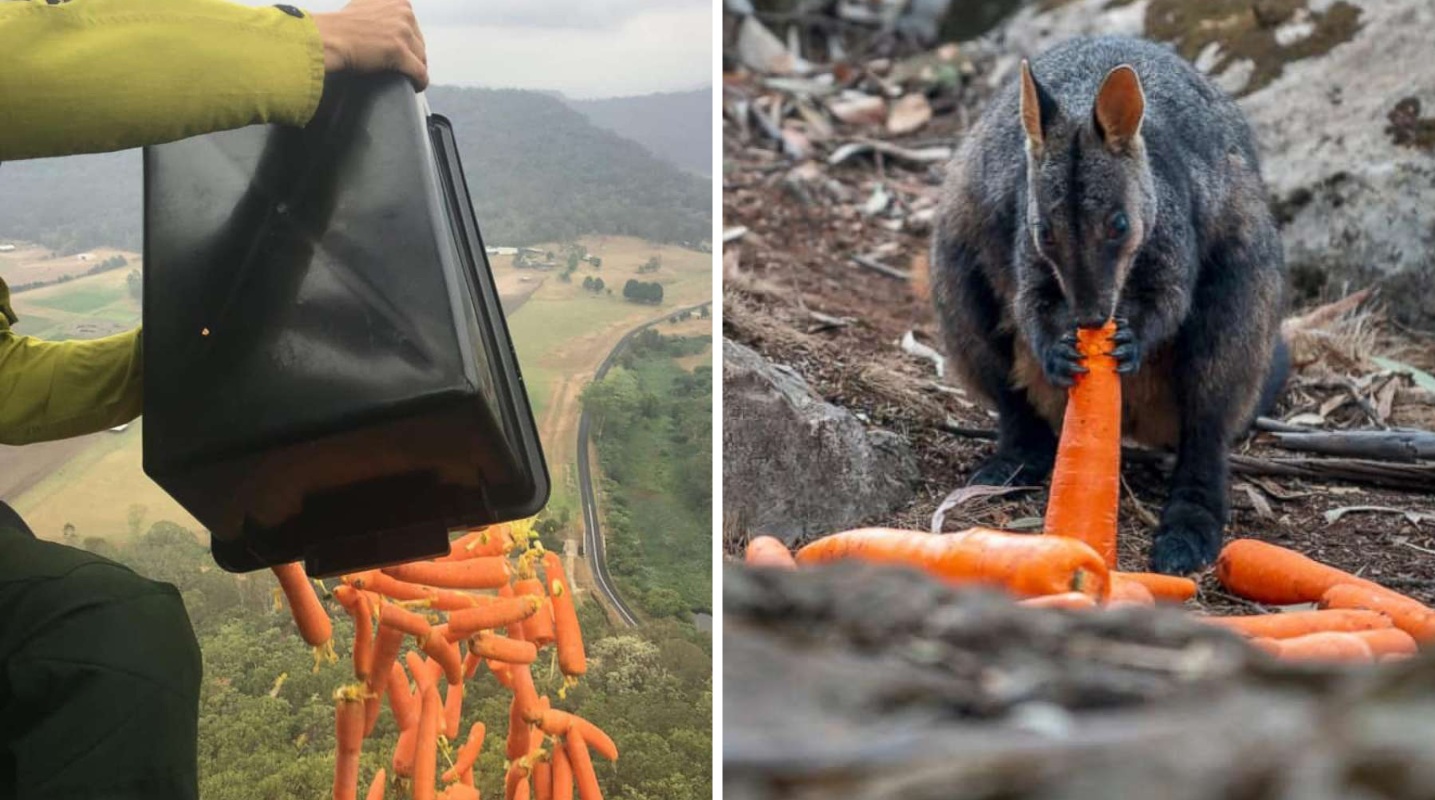
A heartwarming moment from one of Australia’s darkest periods has resurfaced across social media — and it’s reminding people just how far efforts went to protect wildlife during the devastating bushfires.
Thank you for reading this post, don't forget to subscribe!At the height of one of the most devastating environmental disasters in recent history, an extraordinary rescue effort unfolded in the skies above Australia – not for people, but for the local wildlife.
More than six years on, as the world continues to reflect on the scale of the 2019–2020 bushfire crisis, one story has once again gone viral on social media. In a bid to keep vulnerable wildlife alive, the Australian government quite literally rained food from above.
As bushfires tore through vast areas of the country, entire ecosystems were left scorched. Natural food sources vanished almost overnight, and for many animals that managed to escape the flames, a slower, quieter threat emerged: starvation.
That’s where “Operation Rock Wallaby” came into play, ABC News 30 reports.

In New South Wales, authorities turned to helicopters and airplanes to deliver emergency supplies to stranded wildlife populations. According to reports at the time, more than 4,000 pounds (over 2,200 kilograms) of carrots and sweet potatoes were dropped across multiple regions, targeting colonies of brush-tailed rock-wallabies.
These animals, already classified as endangered in southeastern Australia before the fires began, suddenly found themselves in an even more precarious position.
“Initial fire assessments indicate the habitat of several important Brush-tailed Rock-wallaby populations was burnt in the recent bushfires,” New South Wales Environment Minister Matt Kean said at the time, per ABC News. “The wallabies were already under stress from the ongoing drought, making survival challenging for the wallabies without assistance.”
The operation wasn’t random. Thousands of pounds of both food and water were carefully distributed across key habitats, including the Capertee and Wolgan valleys; Yengo National Park; and in the Kangaroo Valley.
“The provision of supplementary food is one of the key strategies we are deploying to promote the survival and recovery of endangered species like the Brush-tailed Rock-wallaby,” Kean added. “The wallabies typically survive the fire itself, but are then left stranded with limited natural food as the fire takes out the vegetation around their rocky habitat.”

Per the WWF, 33 people tragically lost their lives as a direct results of the bushfires, with hundreds more later passing away as a result of health issues such as smoke inhalation. Additionally, 3,094 homes were lost – displacing hundreds of families.
Additionally, in the WWF’s report, Australia‚’s 2019-2020 Bushfires: The Wildlife Toll, it was estimated that “nearly 3 billion animals perished or were displaced by the fires” – a truly unfathomable number.
Nevertheless, with the tragic impact of the fires still being felt so many years on, it is the story of kindness, hope, and goodwill that has managed to once again bring a smile to thousands on social media.
Featured image credit: The Hon. Matt Kean/Facebook
