

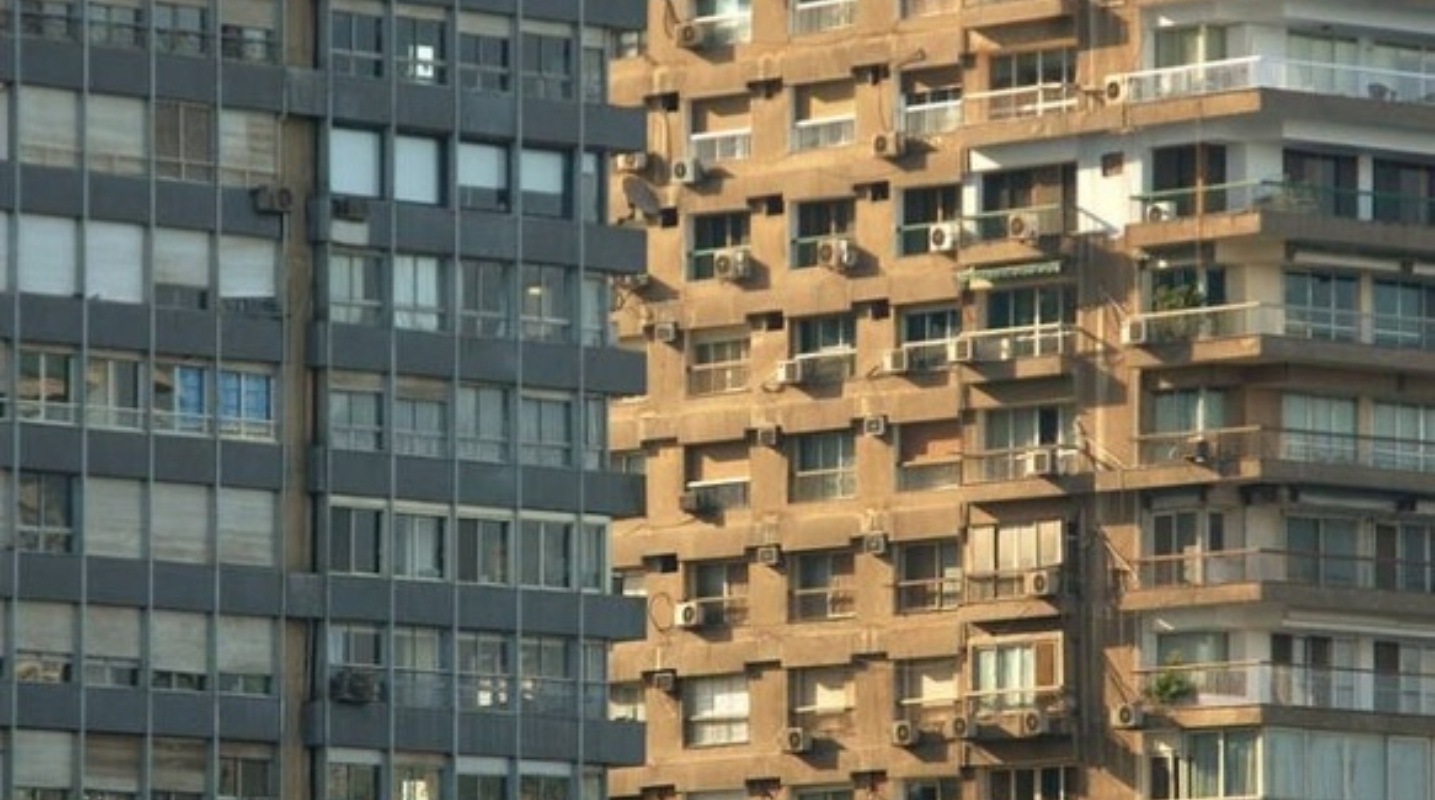
At first glance, it looks like a simple photo.
Thank you for reading this post, don't forget to subscribe!Two skyscrapers. Clear lines. Nothing unusual. But give it a couple of seconds and your brain starts to argue with itself — and suddenly, what should be an easy question becomes surprisingly difficult to answer.
Yes, a viral image shared on Reddit’s Confusing_Perspective forum has left thousands of people completely baffled after one user posed a deceptively simple question: “Which building is closer?”
That’s it. No trick wording. No complicated setup. And yet, the longer you stare at the image, the less certain you become.
Most people initially assume the lighter-coloured building on the right is closer. It stands out more, feels more prominent, and naturally draws the eye.
But then something shifts.
Look again — and suddenly the darker building on the left starts to feel closer instead. And then, just as quickly, your brain flips back the other way.
It’s the kind of visual tug-of-war that keeps switching sides the longer you focus on it. And judging by the reactions online, nobody is immune.
“This one is one of the best ones I’ve seen,” one person commented. “My first impression was ‘right’ but then I quickly realised it was ‘left’ but even after that the buildings were taking turns popping into the front.”
There was one person who summed it up perfectly with the simple line: “The one in front.”
“I have to look at the right building’s edge where it angles (to the right), which is smaller than the left building’s edge, to sort of force the image to stay still in my head,” another added.
Others tried to break it down more logically.
“If you look closely the building on the left clearly overlaps the one on the right.”
“Left because of the shadow. The building on the right has a shadow on the right of the image where the building goes around a corner. The sun is up and to the left, which is shining on the side of the building.”
Despite the confusion, there is a correct answer.
If you zoom in closely, you can see where the buildings overlap — and that’s the key detail. The skyscraper on the left actually sits in front of the one on the right, making it the closer of the two.
But the reason it’s so hard to figure out comes down to how our brains process visual information.
Optical illusions like this work by exploiting the way we interpret depth, light, and perspective. Our brains rely on visual cues — shadows, angles, edges — to make quick judgments about what we’re seeing.
When those cues conflict, the result is confusion.
In this case, the lighting, angles, and overlapping lines create just enough ambiguity to throw everything off balance. Your brain keeps switching between interpretations, trying to settle on one that makes sense.
And that’s why it feels like the buildings are “taking turns” being in front. But did you get it right?
Featured image credit: Reddit
