

In a world increasingly overwhelmed by plastic waste, one supermarket in Thailand has found a strikingly simple — and surprisingly elegant — solution.
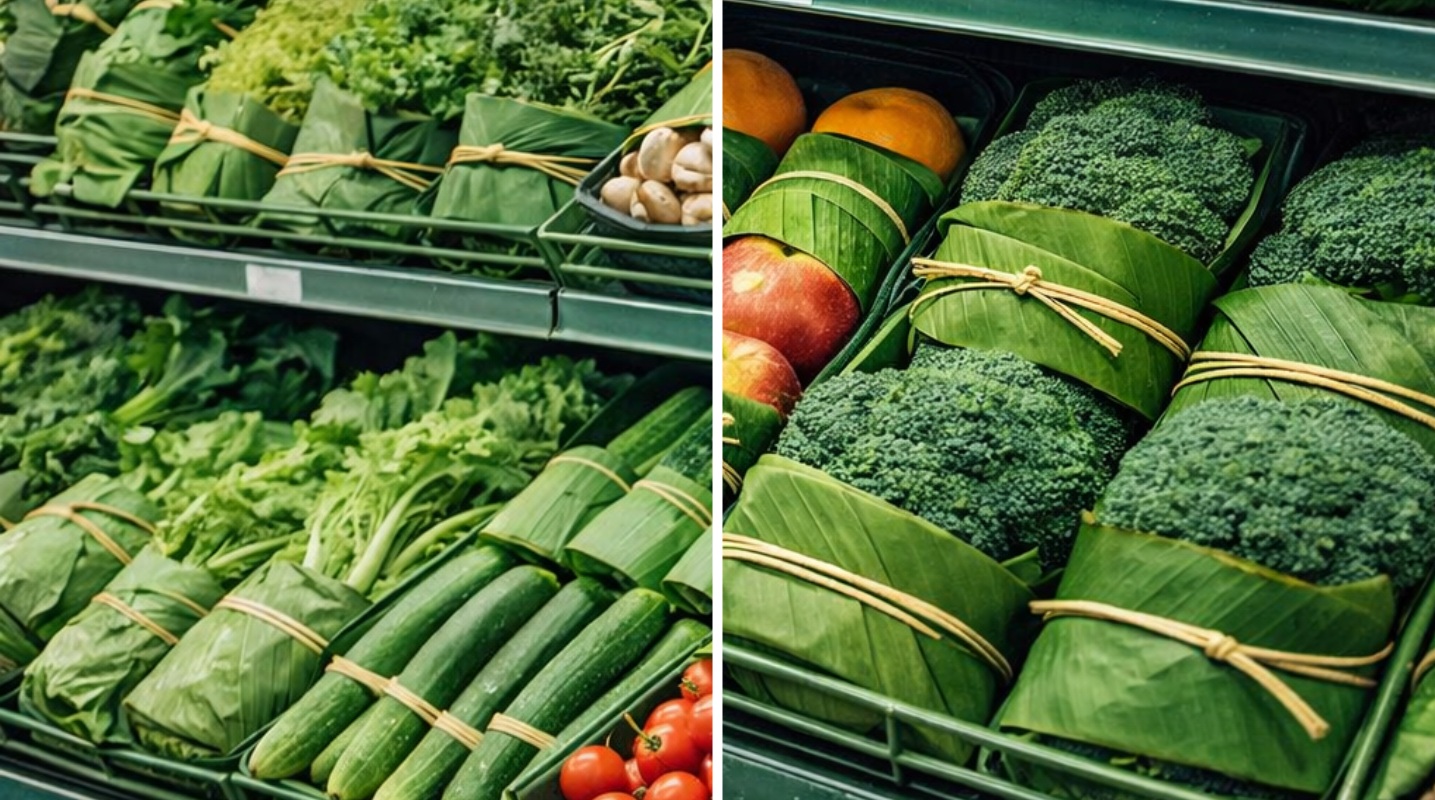
Thank you for reading this post, don't forget to subscribe!Instead of wrapping fruit and vegetables in layers of plastic, Rimping Supermarket in Chiang Mai has turned to something far more natural: banana leaves, Forbes reports.
The idea, which quickly went viral after being shared online, shows fresh produce neatly wrapped in large green leaves and tied together with small strips of bamboo. A minimal label is added — but compared to conventional packaging, the reduction in plastic is immediately obvious.
It’s a small change in appearance, but one with potentially massive implications.
Plastic pollution has become one of the defining environmental challenges of our time.
Of the 9 billion tonnes of plastic ever produced, only 9% has been recycled. The rest has accumulated in landfills, oceans, and ecosystems around the world.
According to the United Nations Environment Programme, that number could rise dramatically in the coming decades, with projections estimating that by 2050 there will be 12 billion tonnes of plastic waste in the environment.
Much of that comes from everyday items — plastic bottles, food wrappers, and grocery packaging — the very things supermarkets rely on.
That’s what makes this initiative stand out.
Rather than investing in complex new materials or technologies, Rimping Supermarket has gone back to basics.
Banana leaves aren’t just an aesthetic choice — they’re highly functional. They are naturally large, thick, and flexible, making them easy to fold around produce without tearing. They’re also water-resistant, which helps protect fresh food in much the same way plastic does.
For centuries, banana leaves have been used across tropical regions for food preparation, dishware, and storage, per the Bangkok Post.
In Southeast Asia, they are commonly used to wrap sticky rice. In parts of Mexico, tamales are traditionally wrapped in banana leaves. In Hawaii, they’re used during pig roasts to shield meat from intense heat.
In other words, this isn’t a new invention — it’s a rediscovery.
At Rimping, the leaves are paired with biodegradable bamboo ties, creating packaging that is almost entirely natural.
While a small amount of plastic may still be used for labeling, the overall reduction is significant.
One of the key reasons this approach works so well in Thailand is availability.
In tropical regions, banana leaves are abundant and often inexpensive — sometimes even free depending on supply. That makes them a practical alternative to plastic in places where they grow naturally.
However, the same solution may not translate as easily to other parts of the world.
In colder climates, sourcing banana leaves could be costly or impractical. But the broader idea — using locally available, biodegradable materials instead of plastic — is something that could be adapted globally.
The initiative raises an important question: what could supermarkets use in place of plastic, based on what grows around them?
Beyond its environmental benefits, the banana leaf packaging has also captured public attention for another reason — it looks good. The vibrant green leaves create a visually appealing display that stands out compared to standard plastic-wrapped produce.
It’s a reminder that sustainability doesn’t have to come at the expense of presentation — in fact, it can enhance it. And in a retail environment where appearance matters, that could be a powerful incentive for change.
Ultimately, what makes this approach so compelling is its simplicity.
There’s no new machinery, no complicated supply chain overhaul — just a different way of thinking about something as routine as packaging.
At a time when plastic waste continues to rise, small, practical ideas like this offer a glimpse of what change can look like.
Not always high-tech. Not always expensive. But effective. And sometimes, as this supermarket in Thailand has shown, the answer has been growing on trees all along.
Featured image credit: World Manual (Created with AI to help illustrate this story)
