

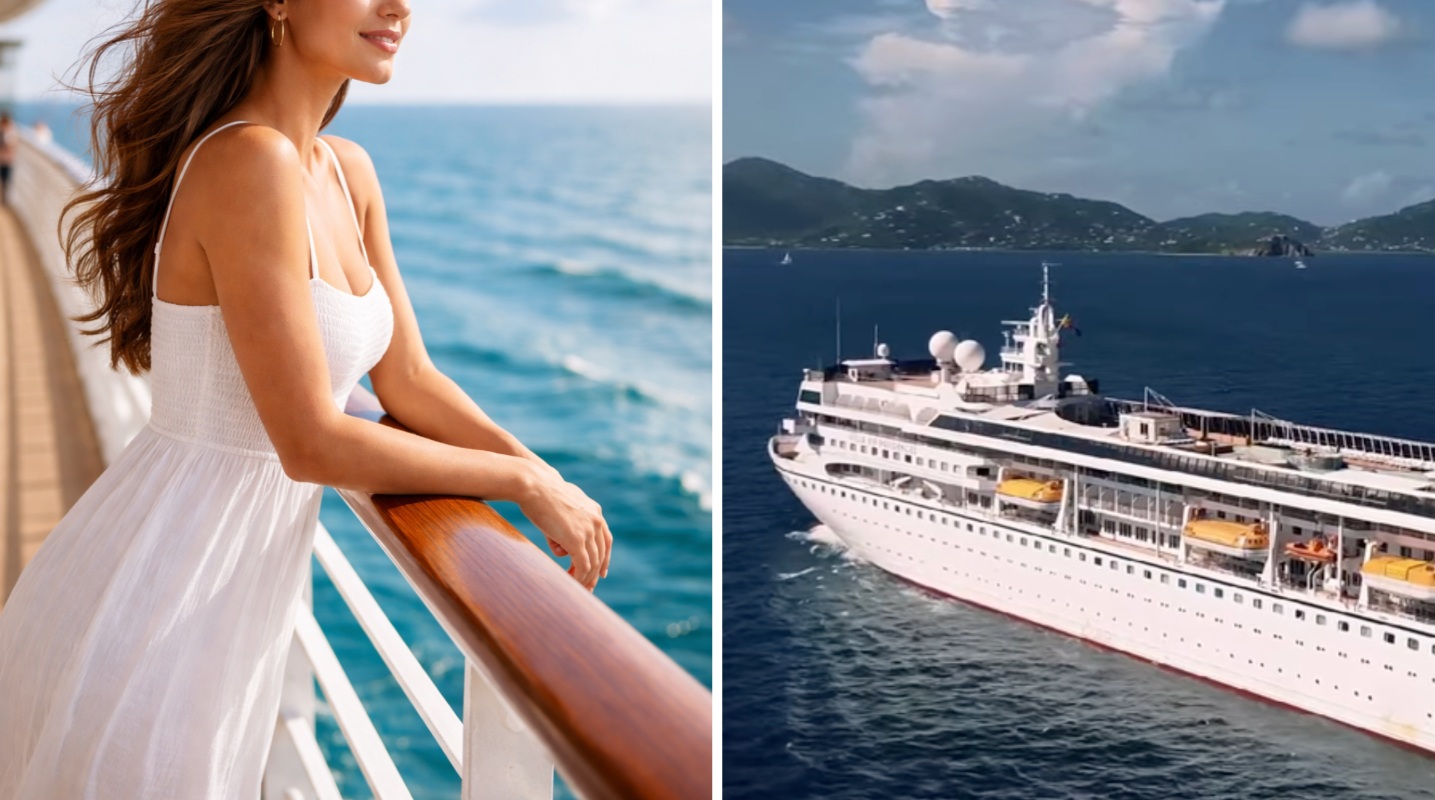
For most people, a cruise is a break from reality. For others, it might just become their entire life.
Thank you for reading this post, don't forget to subscribe!A new concept is turning heads — and sparking serious interest — after offering people the chance to live permanently at sea for the next 15 years.
And remarkably, hundreds have already signed up.
The ship, called Odyssey and operated by Villa Vie Residences, is being described as “The First Perpetual World Cruise” — a continuous global voyage designed not as a holiday, but as a completely new way of living.
That’s exactly how founder Mikael “Mike” Petterson sees it.
“What if you never had to go home because you were already there? Odyssey turns the entire world into your neighborhood,” he explained in an interview with PEOPLE.
Rather than a typical cruise itinerary, Odyssey will continuously travel the globe, visiting up to 140 countries while updating its route every three and a half years.
But the biggest shift isn’t where it goes. It’s how people live on board.
This isn’t a temporary stay; It’s ownership. Instead of booking a cabin for a few weeks, residents can buy their own space on the ship — customising it, renting it out, or even reselling it later.
“You can decorate the way you wish, invite guests, rent or even resell at a later date,” the website states. In other words, it’s closer to buying a property than booking a holiday.
And that’s exactly how it’s being pitched: “Odyssey gives people the chance to explore the world without ever leaving home.”
And life on board is built around that idea. Residents wake up in a new destination regularly, but with the same routines, spaces, and community around them. The description reads: “Our residents wake up to a new backyard every day, but more importantly, they wake up with a sense of freedom and community that’s hard to find anywhere else.”
The ship itself is designed to support long-term living, not short-term travel.
There’s a library, gym, spa, pool, business centre with high-speed internet, and even offices for remote work. For those who want to stay connected, the ship is equipped with Starlink — allowing residents to stream, work, and stay online wherever they are in the world.
And the demographic reflects that shift.
From semi-retired couples to digital nomads and even families with children, the idea of living at sea is attracting a wide mix of people. “All they need is a digital connection and a room to do their work,” Petterson said in an interview with Forbes.
There’s even a sense of community forming onboard. Residents dine together, plan excursions together, and — in many cases — build entirely new lives together.
But all of this comes at a price.
And while it might sound extreme, the numbers are surprisingly comparable to traditional housing.
The cheapest option — an interior cabin with no windows — starts at $129,999 (£97,450). Considering the average house price in the UK (per the December 2025 House Index) was £270,000 – that’s more than half the price!
At the top end, a luxury villa suite can cost $439,999 (£329,850). That’s more than the average house price in the US, which sits at around $360,591 — but even still, not dramatically so.
And for some, that’s exactly the point. Instead of paying for a static home, you’re paying for a moving one. Another thing to consider is the monthly fees – which range from around $2,000 to $10,000, depending on the level of accommodation. These cover essentials like food, fuel, staff, and maintenance — effectively replacing traditional living costs.
Meals are included, with a rotating menu, and services such as weekly cleaning and laundry are also part of the package.
Of course, not everything is included. Extras like excursions, medical services, and certain onboard experiences come at an additional cost.
But for many, the trade-off is worth it. Because rather than just buying a house or flat, you’re buying into a completely different lifestyle. And it’s one that’s already proving popular.
More than 600 people have signed up for the experience — some even selling their homes to fund the move. It reflects a growing trend toward what’s being called “residential cruising,” where the line between travel and everyday life begins to blur.
As Petterson put it: “Long-term living aboard a cruise ship is more of a lifestyle than a vacation.”
And for those already on board — or preparing to be — that lifestyle could last the next 15 years.
No packing. No fast-approaching check-out dates. Just a constantly changing view outside your window — and the world, quite literally, as your neighbourhood.
Featured image credit: World Manual/YouTube/Villa Vie Residences
