

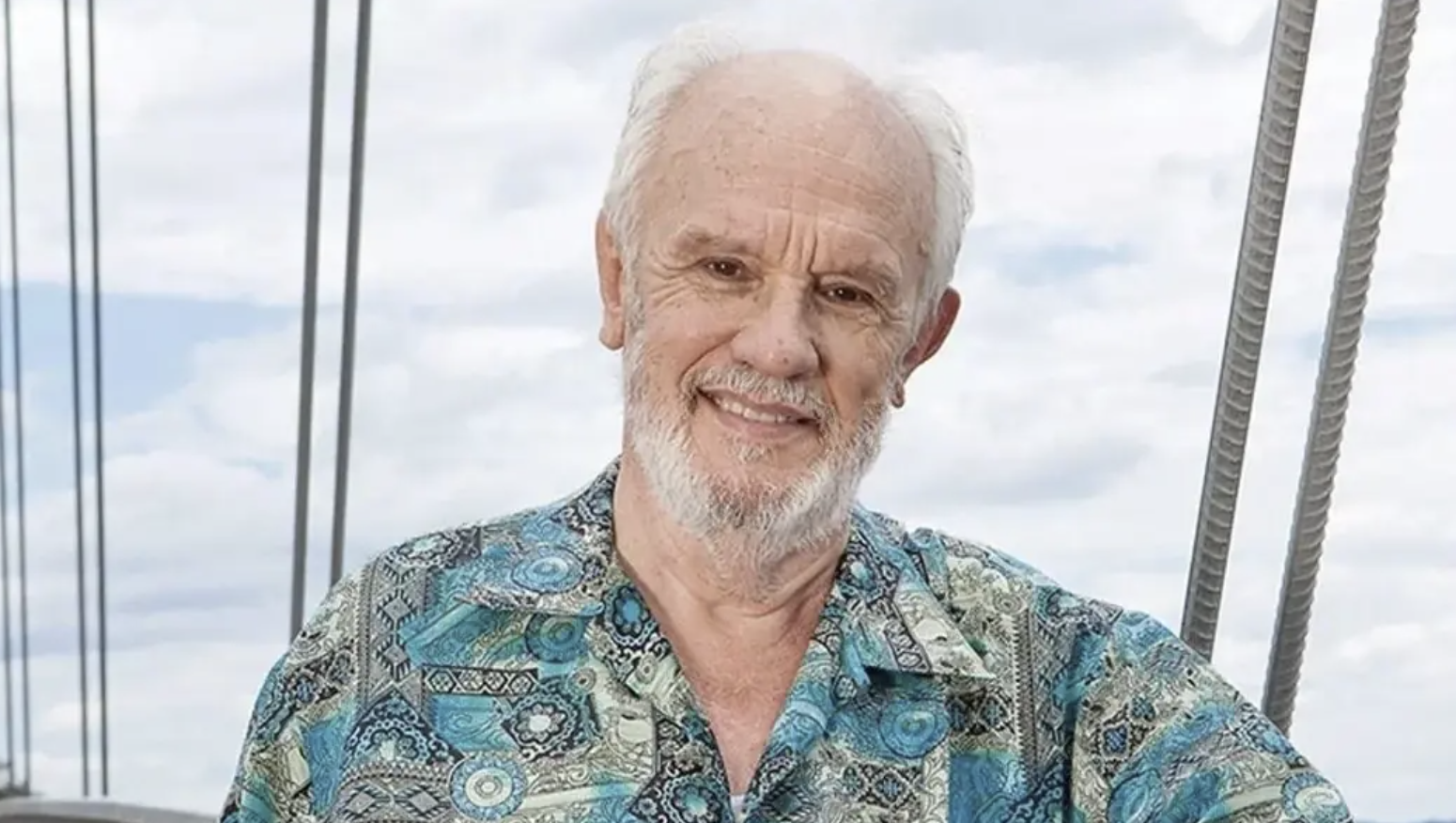
There are heroes whose names fill history books, and then there are those whose impact quietly reshapes millions of lives behind the scenes. James Harrison was firmly in the latter category.
Thank you for reading this post, don't forget to subscribe!For more than 60 years, the Australian blood donor gave something remarkably rare — and in doing so, helped save the lives of more than two million babies around the world.
Harrison, widely known as the “Man with the Golden Arm,” passed away at the age of 88 in 2025, per BBC News.
While many people donate blood during their lifetime, Harrison’s contribution was extraordinary. Flowing through his veins was an antibody so rare and valuable that it became the foundation for a life-saving treatment used during pregnancy.
That antibody, known as Anti-D, is critical in preventing a condition called hemolytic disease of the fetus and newborn (HDFN). The disorder occurs when a pregnant mother’s immune system mistakenly attacks her unborn baby’s red blood cells, which can cause severe anaemia, heart failure, or even death.
For decades, Harrison’s blood plasma helped produce the Anti-D treatment used to protect at-risk pregnancies. His donations were instrumental in dramatically reducing the number of babies who died from the condition.
But the remarkable story behind his generosity began long before he ever rolled up his sleeve.
When Harrison was just 14 years old, he underwent major chest surgery. The procedure required a large blood transfusion, and the experience left a lasting impression on him. Realising that donated blood had saved his own life, he made a promise to give back as soon as he was able.
That promise became a lifelong commitment.
At the age of 18, Harrison began donating plasma. From that moment on, he rarely stopped. Every two weeks, he returned to donate again, continuing the routine until he was 81 years old.
By the time he finally stepped away from donating, Harrison had given blood more than 1,100 times.
Over those six decades, his plasma became one of the most valuable medical resources in the world. Scientists discovered that it contained unusually strong levels of the Anti-D antibody, allowing it to be used in treatments for pregnant mothers at risk of HDFN.
Before the mid-1960s, the outlook for babies diagnosed with the condition was grim. Around half of the cases proved fatal.
The development of Anti-D treatments changed everything. Thanks to donors like Harrison, millions of babies have since been born safely.
The impact of his contributions even reached his own family. Harrison’s daughter and two of his grandchildren were among those who received the Anti-D immunisation — a powerful reminder that his work was saving lives both close to home and across the world.
His daughter, Tracey Mellowship, reflected on her father’s legacy with pride.
“He was also very proud to have saved so many lives, without any cost or pain. It made him happy to hear about the many families like ours, who existed because of his kindness,” she said.
Despite the staggering number of lives touched by his donations, Harrison himself always downplayed the sacrifice.
According to his daughter, he often kept his message simple: “He always said it does not hurt, and the life you save could be your own.”
In recognition of his incredible dedication, Harrison received the Medal of the Order of Australia in 1999 — one of the country’s highest honours.
He also once held the world record for the most blood plasma donated. Harrison earned the title in 2005 and retained it for nearly two decades before being surpassed by a donor in the United States in 2022.
Yet the story behind the Anti-D treatment also highlights how rare donors like him truly are.
According to the Australian Red Cross Blood Service, also known as Lifeblood, fewer than 200 people in Australia currently provide Anti-D plasma. Despite the small number, these donors help protect around 45,000 mothers and babies every year.
With such limited supply, researchers are now attempting to replicate what Harrison’s blood provided naturally.
Lifeblood is working alongside Australia’s Walter and Eliza Hall Institute of Medical Research to develop lab-grown Anti-D antibodies by replicating blood and immune cells from donors like Harrison.
The goal is to create a stable, scalable treatment that does not rely entirely on rare donors.
As Lifeblood’s research director David Irving explained, “Creating a new therapy has long been a ‘holy grail,'” particularly given how difficult it is to find people capable of producing large quantities of the necessary antibodies.
Even so, Harrison’s story remains one of the most remarkable examples of how a single person’s generosity can ripple across generations.
A statement from Lifeblood described his lifetime of giving as a “remarkable legacy” — and it’s hard to argue with that description.
More than two million babies are alive today thanks, in part, to a man who simply kept showing up every two weeks, year after year.
And in a world that often celebrates the loudest achievements, Harrison’s legacy stands as proof that quiet acts of kindness can sometimes save millions.
Featured image credit: Australian Red Cross
