

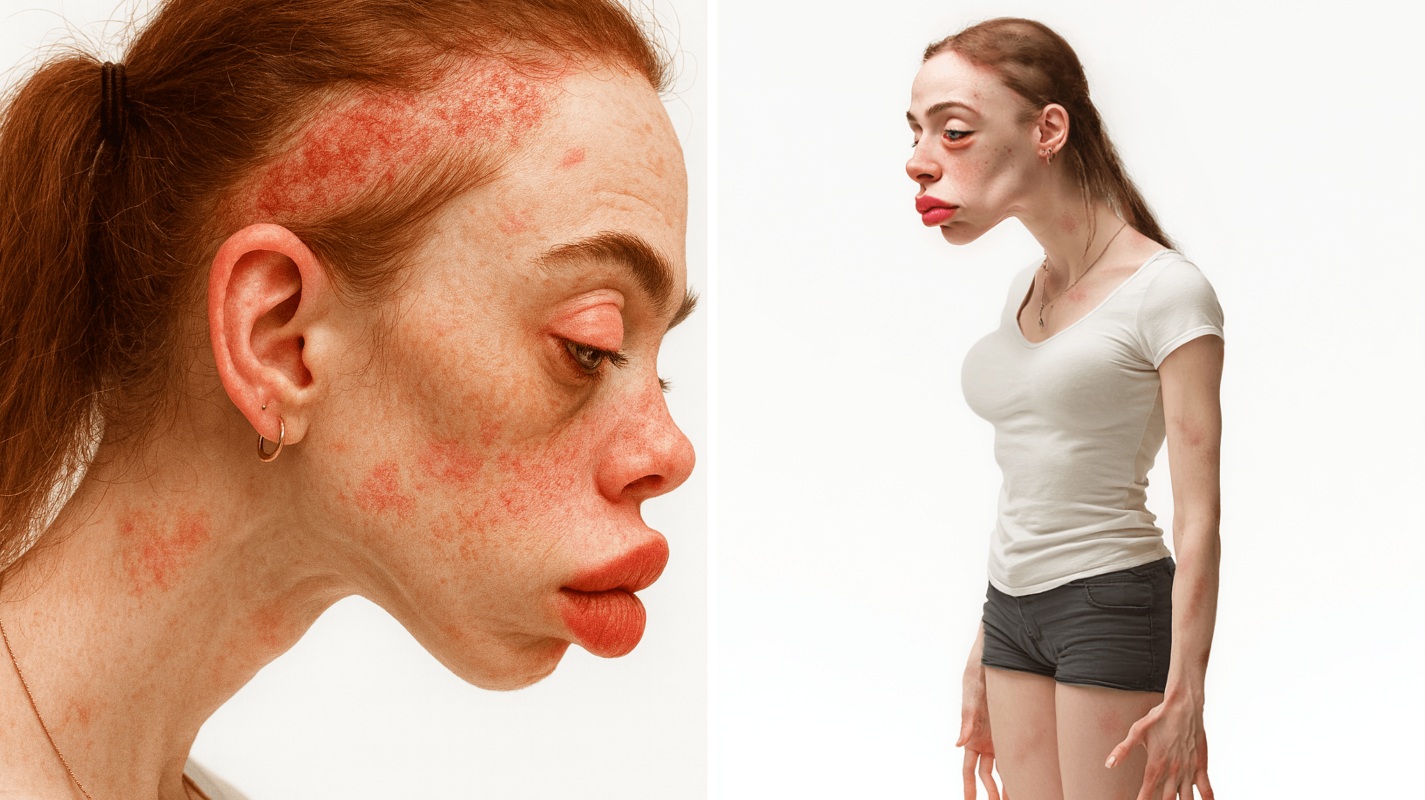
On social media, the influencer dream sells sunsets, sponsorships and soft-launch relationships. However, a newly generated set of images is asking a far more uncomfortable question: What does that lifestyle look like in 25 years?
Thank you for reading this post, don't forget to subscribe!With an estimated 30–50 million influencers worldwide — a number growing by 10–20% each year — the profession is no longer niche. For some, it’s a full-time career that can stretch up to 90 hours a week.
And while many see the role of an “influencer” being nothing more than reviewing free gifts and attempting to blag free meals, what they don’t see is the endless editing, relentless posting, and the impact always being online can have.
Now, a concept model named “Ava” has been released as a warning.
She’s being described as the influencer of 2050 — and experts say her appearance reflects the long-term physical impact of algorithm-chasing, beauty standard pressures and constant screen exposure.
According to the creators, Ava is “today’s warning” for the influencer of tomorrow, Casino.org wrote.
Her posture is the first thing you notice.

Years of filming on smartphones, hunching under ring lights and leaning toward laptop screens have left her with rounded shoulders and a permanent forward head tilt — commonly referred to as “text neck” or “tech neck.”
Research published in Interdisciplinary Neurosurgery notes: “Among smartphone users, almost every time you will notice their cervical spine in a position of 15 to 60 degrees of flexion.”
That repeated strain can lead to chronic neck pain and long-term spinal issues — something increasingly seen in younger, screen-heavy generations.
Her skin tells another story – Patchy. Red. Irritated.
Experts link it to contact dermatitis caused by daily cosmetic layering, constant skincare product swaps and heavy makeup use — all common habits among beauty creators.
There’s also the impact of artificial light, as long-term exposure to LED lighting — from ring lights to screens — has been associated with accelerated ageing, pigmentation changes and inflammation, sometimes referred to as “digital ageing.”
Research published in Aging and Mechanisms of Disease found that prolonged artificial light exposure may impact overall health. A 2019 publication even suggested daily blue-light exposure could shorten lifespan and contribute to brain neurodegeneration.
David Lee from the University of Buffalo states: “The more participants used social media, the more somatic symptoms they experienced and visits to the doctor they reported. They also showed higher levels of chronic inflammation.”

Then there are her eyes – plagued by dark circles, puffiness, and persistent redness.
The condition is known as Computer Vision Syndrome (CVS), also called digital eye strain — a cluster of eye and vision problems caused by prolonged screen use. A clinical review in BMJ Open Ophthalmology notes: “Estimates suggest its prevalence may be 50% or more among users.”
Symptoms can include dryness, headaches, blurry vision and under-eye swelling — hardly the filtered glow seen on feeds.
Sleep deprivation is another hidden factor.
Posting to global audiences, late-night editing sessions and sponsorship events that stretch into the early hours can disrupt circadian rhythms. The National Sleep Foundation warns: “Checking social media, sending emails, or looking at the news before bed can keep us awake…the blue light emitted from electronic screens has the greatest impact on sleep.”
Chronic sleep disruption has been linked to fatigue, thinning hair and swollen lower eyelids — all features reflected in Ava’s design.
Her facial structure also appears altered.
The report highlights “Overfilling Syndrome” — the repeated use of facial fillers combined with product migration over time, often influenced by trends such as “Snapchat Dysmorphia” and “Pillow Face Syndrome.”
PRIME, International Journal of Aesthetic and Anti-Ageing Medicine states: “Facial overfilled syndrome…cause by inappropriate filler choice, incorrect placement, and over-zealous lifting attempts,” influenced by social media’s distorted beauty ideals.
Even her hair shows signs of strain.
Years of heavy extensions and tight styling have led to thinning and visible hair loss — a condition known as traction alopecia. Dr. Aamna Adel tells Casino.org: “The weight and constant tugging at the hair follicle can lead to a condition called traction alopecia…Over time, it can be irreversible and it can lead to permanent hair loss.”

The message behind Ava isn’t subtle.
From endless brand trips under bright lights to the daily grind of filters and photo shoots, the influencer lifestyle may look glamorous on screen — but sustained habits can leave a physical imprint.
The creators of the report were clear in their conclusion: “The takeaway is simple: balance the ambition, set boundaries around your work, and remember that health and well-being will always outlast trends,” the experts added.
Social media users have reacted quickly.
“Oh, well that’s refreshing,” one Instagram viewer typed, with another adding: “I can’t think of a sadder job title than ‘Influencer’”.
A third wrote: “Oh well that made me sit up straight!”
Ava may be a digital concept — but the warning is grounded in research. And as the influencer economy continues to grow, the question isn’t whether the career is viable… or even sustainable.
Featured image credit: Casino.org
