

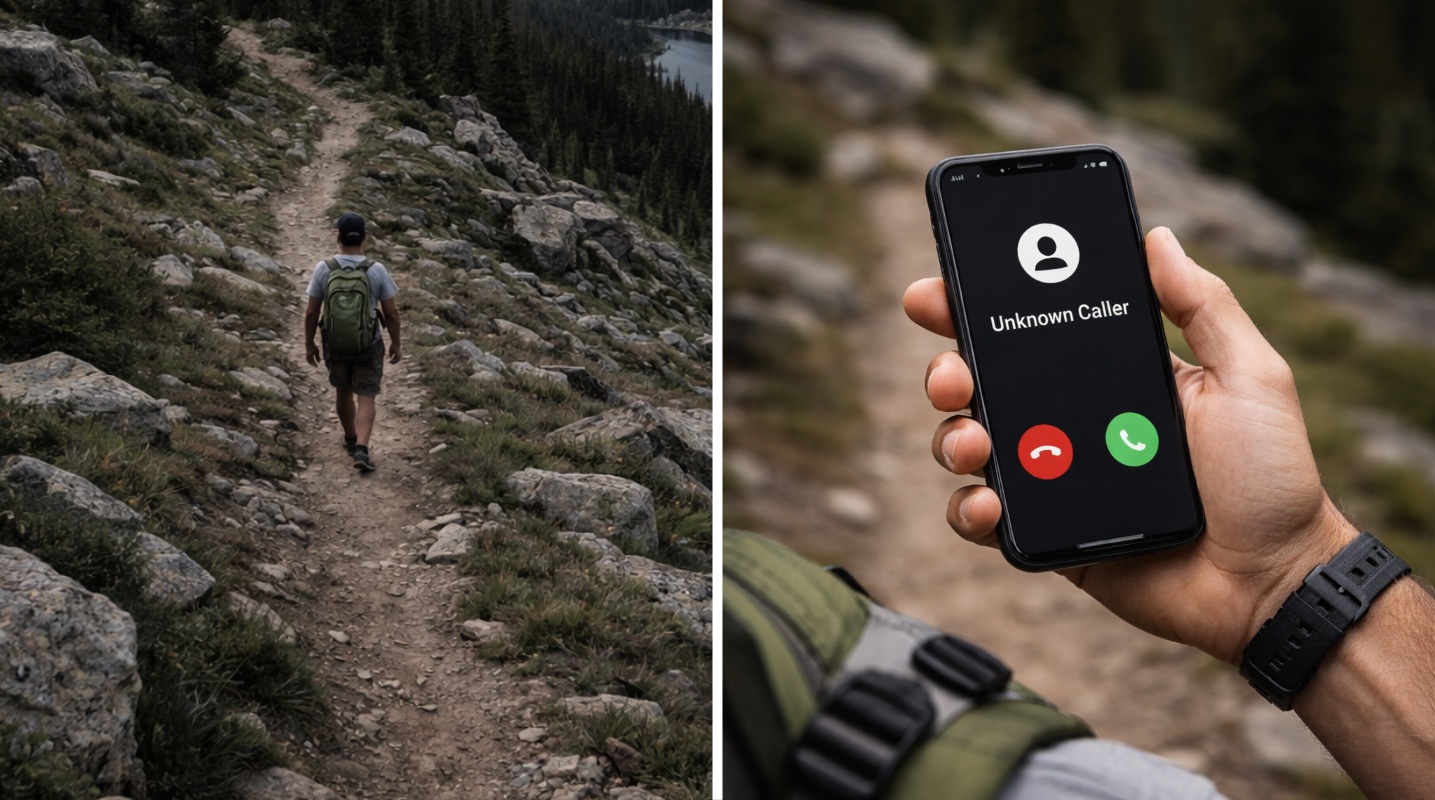
Now here’s a story that many millennials and introverts will be able to relate to.
Thank you for reading this post, don't forget to subscribe!A routine hike up the highest peak in Colorado turned into a 24-hour ordeal — and it resulted in serious warnings from search and rescue officials.
What began as a solo trek up Mount Elbert ended with more than 32 hours of rescue resources deployed, multiple teams scouring “high probability areas”, and one key mistake that officials say could easily be avoided, The Guardian reports.
The unnamed hiker set off from the south trailhead at 9:00AM on 18 October, 2021. By 8:00PM, having failed to return to where he was staying, he was reported missing.
That’s when Lake County Search and Rescue (LCSR) mobilised.
Repeated attempts were made to contact the hiker through calls, texts and voicemail messages. None were answered.
At around 10:00PM, five rescue team members were deployed to search areas on the 4,401 metre-high (14,440ft) Mount Elbert where a stranded walker would most likely be found. They searched through the night but were unable to locate him, returning at 3:00AM.
A second team of three officials resumed the search at 7am the following morning, focusing on areas where hikers are known to lose the trail.
But at 9:30AM, before rescuers could reach him, the hiker had already made his way back to his lodging site.
He later told authorities he had lost the trail around nightfall and spent the evening trying to relocate it. According to the official statement, he had “bounced around onto different trails trying to locate the proper trailhead” before eventually finding his car the next morning — roughly 24 hours after beginning the hike.
Crucially, he said he had no idea anyone was out looking for him.
There was just one problem.
Rescuers had been trying to call him the entire time.
“One notable take-away is that the subject ignored repeated phone calls from us because they didn’t recognise the number,” the statement added, via The Independent.
Officials say that decision significantly complicated the situation.
“If you’re overdue according to your itinerary, and you start getting repeated calls from an unknown number, please answer the phone; it may be a search and rescue team trying to confirm you’re safe!”
In a separate statement, they reinforced the same point with slightly different wording: “If you’re overdue according to your itinerary, and you start getting repeated calls from an unknown number, please answer the phone; it may be a SAR team trying to confirm you’re safe,” said the statement.
The incident quickly drew strong reactions online, with many questioning how someone who was lost could repeatedly ignore calls during an active search effort.
But Lake County Search and Rescue urged people to consider the mental state of someone navigating a mountain alone after dark.
“Please remember that what seems like common sense in hindsight is not obvious to a subject in the moment when they are lost and panicking,” Lake county search and rescue responded over a Facebook post.
The organisation also pointed out that understanding of rescue systems varies widely across the country.
“In Colorado, most folks who spend time outdoors have a good understanding of the search and rescue infrastructure that is there to help them, but this is not the case nation-wide.”
In a pinned comment, officials reiterated that message, adding: “In Colorado, most folks who spend time outdoors have a good understanding of the SAR [Search And Rescue] infrastructure that is there to help them, but this is not the case nation-wide,” the comment said.
Mount Elbert presents its own challenges. Trails above the treeline can become obscured, particularly outside of late June when snow lingers and conditions shift quickly. LCSR issued a clear reminder to hikers descending the peak: “Please don’t count on following your ascent tracks to descend the mountain, as wind will often cover your tracks,” it said.
In this case, the hiker’s misjudgement did not result in injury. He made it back safely after a night navigating between trails in darkness. But the resources committed tell their own story.
More than 32 hours were dedicated to the search effort. Two separate teams were deployed across difficult terrain, working overnight in cold conditions on a mountain that rises more than 14,000 feet above sea level.
All while the person they were trying to reach was screening their calls.
However, some social media users have defended the hiker. While many have described his actions as “relatable”, one X user wrote: “Clearly this is the fault of scammers. The behavior of the hiker is very understandable.”
However, the takeaway from officials is clear: if you’re out on the mountain and your phone starts ringing from a number you don’t recognise, it might not be spam. It might be the team trying to make sure you make it home.
Featured image credit: World Manual (Generated with AI to help illustrate this story)
